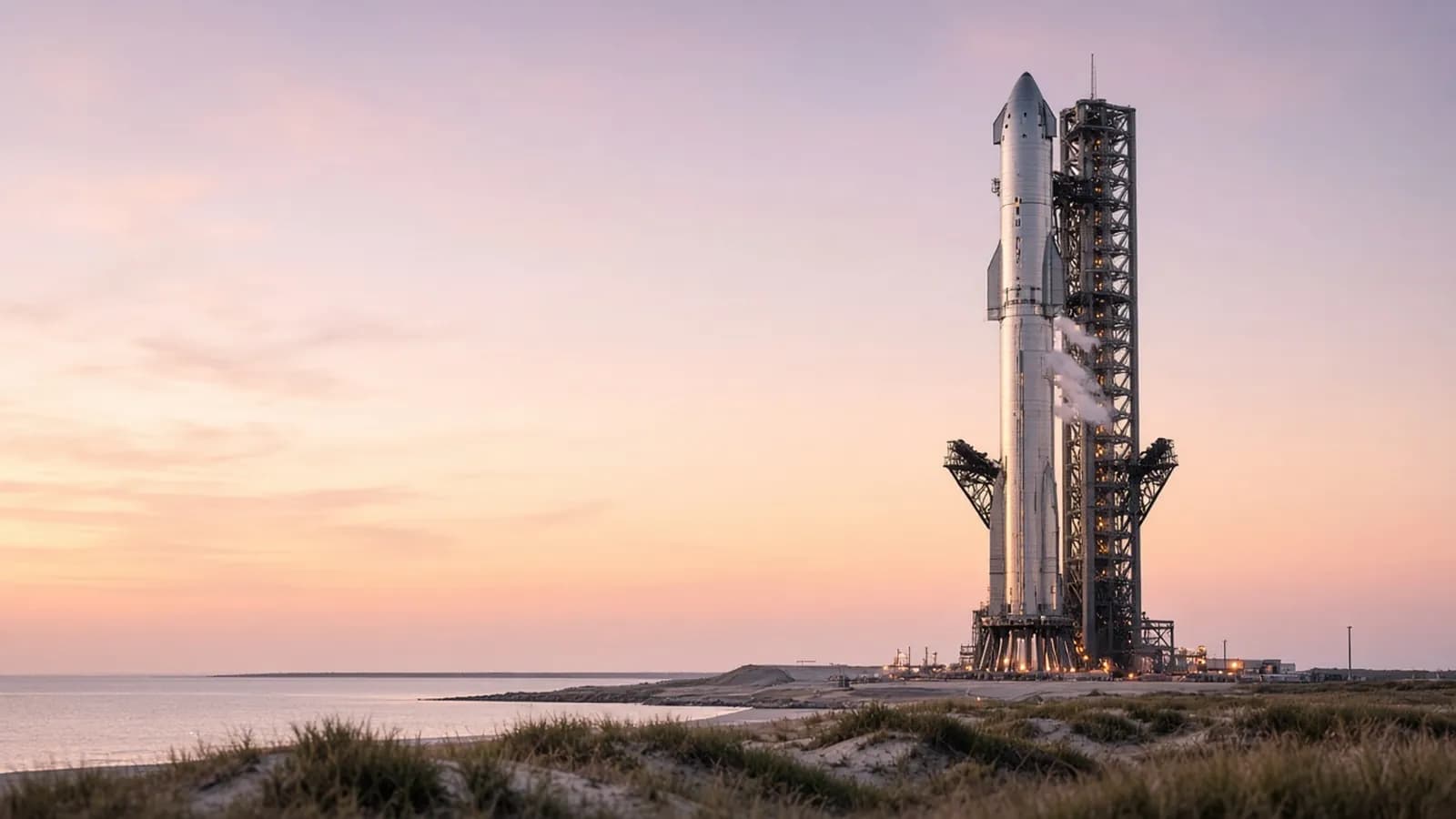
SpaceX is days away from the biggest test yet for its Starship megarocket. The company is targeting Monday, September 28 for Flight 14, the first Starship mission planned to reach orbit instead of flying a deliberately suborbital arc.
The mission cleared a key hurdle on Thursday, September 24, when SpaceX completed a wet dress rehearsal at Starbase in South Texas. In a wet dress, teams load the rocket with propellant and run the countdown without lighting the engines. Space.com reports the stack remains on track for Monday.
If Flight 14 flies as planned, it will be Starship's first time in orbit, its first operational satellite deployment into the Starlink constellation, and its longest flight by far. It's also a milestone NASA is counting on, as its Moon program runs behind schedule.
Here's what SpaceX plans to do, what's still pending, and why it matters.
Launch window and hardware
Flight 14 is scheduled to lift off from Pad 2 at Starbase during a 75-minute window. The window opens at 7:15 a.m. CDT, which is 8:15 a.m. EDT or 12:15 UTC. SpaceX originally targeted Tuesday, September 22. It moved to Monday, September 28 on September 17 and gave no reason for the change.
The fully stacked vehicle is about 407 feet tall. It pairs Super Heavy Booster 21 with Ship 41, and this will be the third flight of the upgraded Starship V3 design.
| Item | Flight 14 plan |
|---|---|
| Target date | Monday, Sept. 28, 2026 |
| Window | 75 minutes from 7:15 a.m. CDT (12:15 UTC) |
| Launch site | Starbase, Texas, Pad 2 |
| Booster | Super Heavy Booster 21 (V3) |
| Upper stage | Ship 41 (V3) |
| Payload | 26 Starlink V3 satellites |
| Orbit | About 275 km, roughly six orbits |
| Duration | Nearly 10 hours |
| Booster recovery | Controlled splashdown, Gulf of Mexico |
| Ship recovery | Controlled splashdown, Pacific Ocean west of Chile |
Both vehicles went through long test campaigns. According to NASASpaceflight reporting summarized on Wikipedia, Ship 41 ran a single-engine static fire on August 19 to simulate a deorbit burn. Two days later it completed a full-duration firing of all six Raptor engines. Booster 21 finished a full-duration static fire on August 28, which Space.com covered at the time.
The flight plan, step by step
SpaceX has published a detailed timeline for the mission. These times are approximate and relative to liftoff:
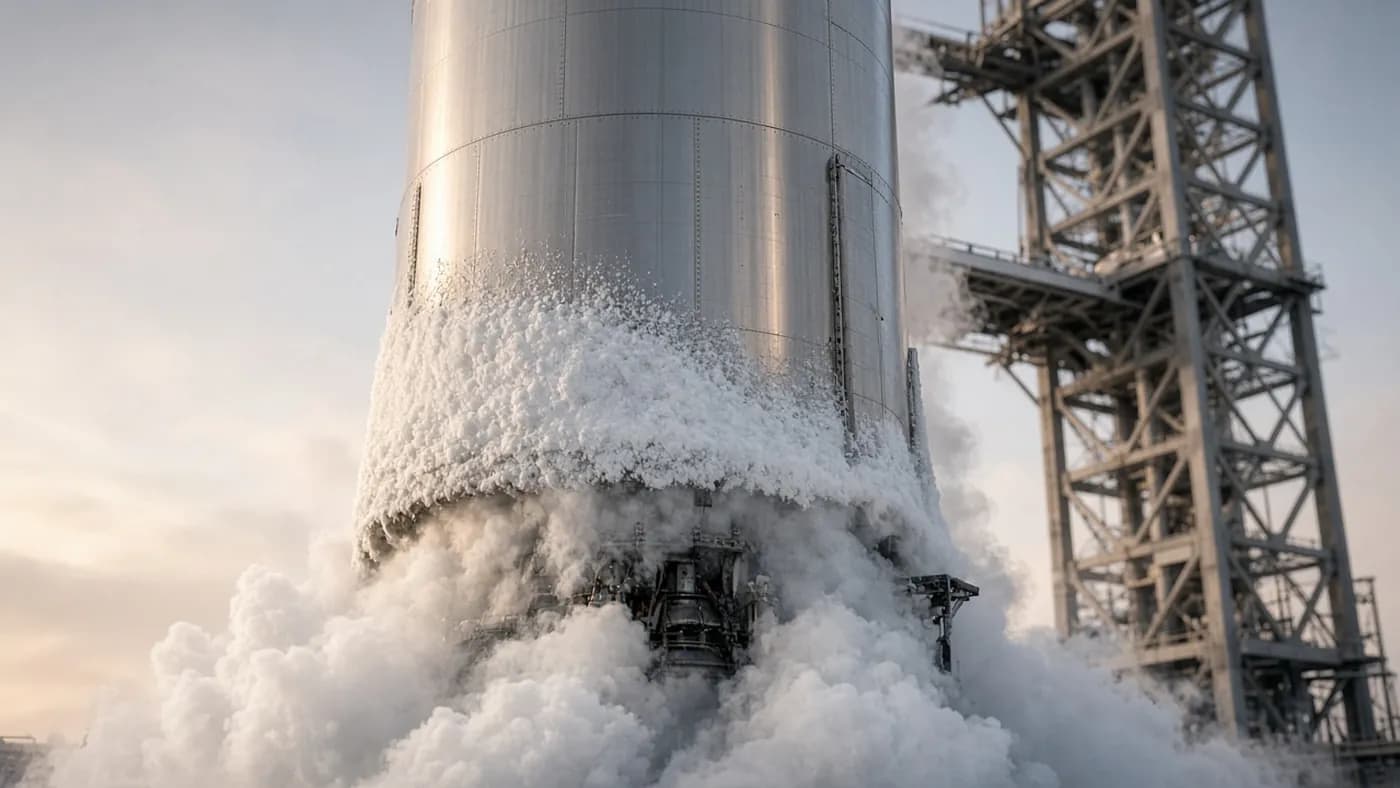
- Liftoff from Starbase. Max Q, the point of peak aerodynamic stress, comes at about T+58 seconds.
- Hot staging at about T+2:22. Ship 41 lights its Raptor engines and separates from the booster.
- Booster return: Super Heavy flips, runs a boostback burn, then starts its landing burn at about T+6:35. It splashes down in the Gulf of Mexico about seven minutes after launch.
- Ship engine cutoff at about T+8:11, on a trajectory similar to earlier flights.
- Orbital insertion burn at about T+25:28. This is new. SpaceX says Ship 41 will only fire this burn after flight controllers confirm enough redundancy in the hardware needed for the later deorbit burn.
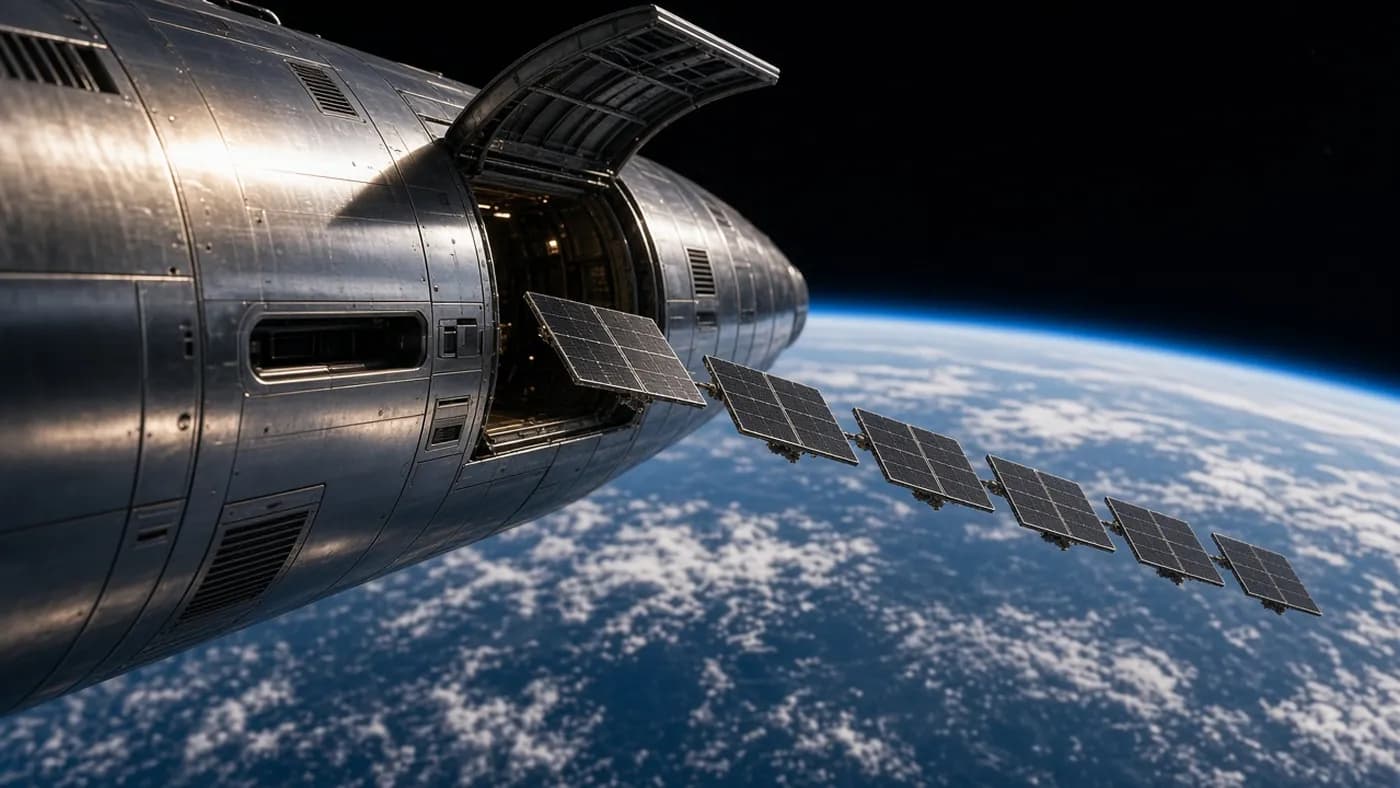
- Starlink deployment from about T+34 minutes to T+1:05, releasing all 26 V3 satellites.
- Orbital coast at about 275 km for roughly six orbits. Health checks are planned during the coast and after deployment. Next Spaceflight reports that controllers could cut the mission to two or five orbits if the ship isn't healthy enough to continue.
- Deorbit burn on a single Raptor engine at about T+8:52.
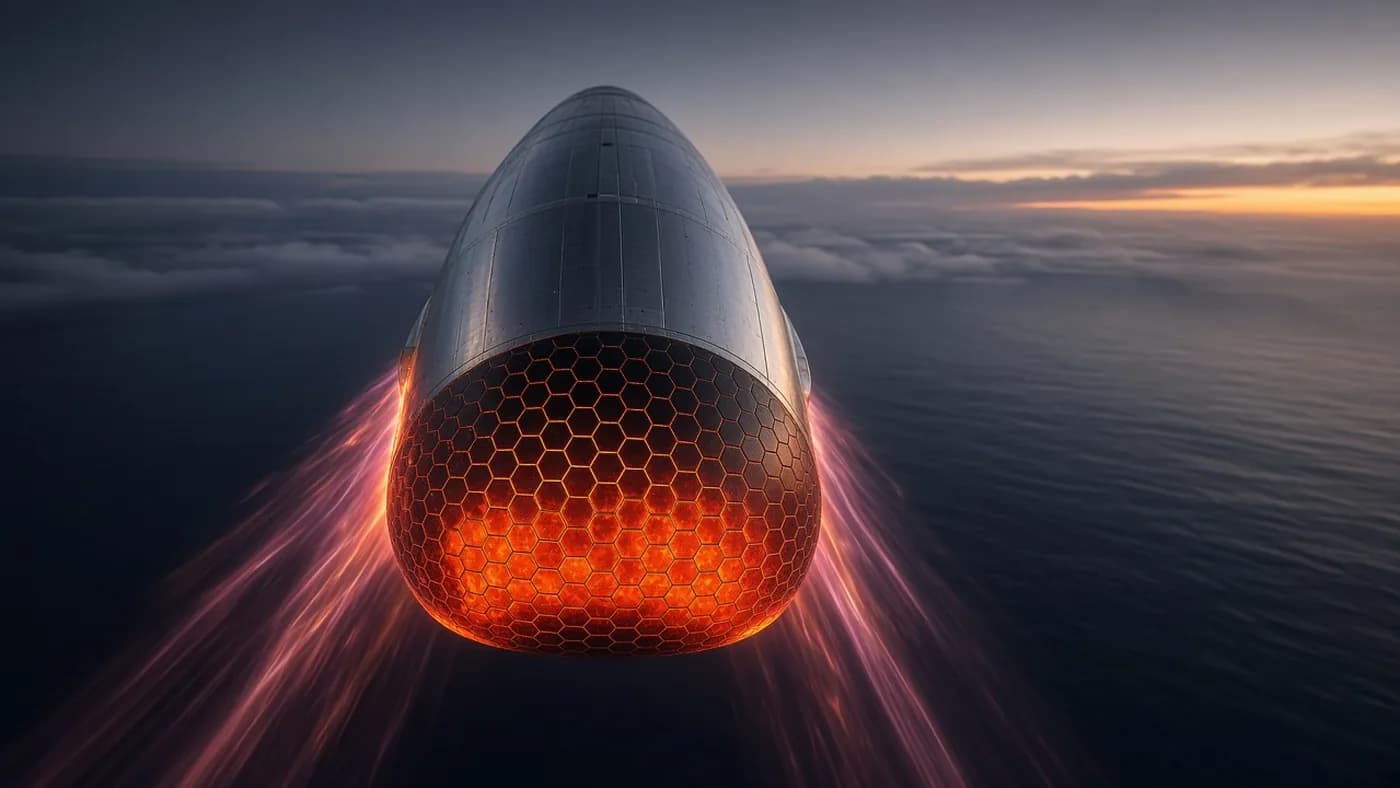
- Reentry at about T+9:29, followed by a belly-first descent guided by the ship's flaps.
- Landing flip, landing burn and splashdown in the Pacific west of Chile at about T+9:50.
Two things set this profile apart. First, this is the first time a Starship will have to bring itself home from orbit, not just finish a suborbital arc. Second, the splashdown zone moves from the Indian Ocean off Western Australia, used on earlier flights, to the Pacific off Chile.
Key takeaway: the orbital insertion burn is conditional. SpaceX has built a decision point into the mission, so Ship 41 only commits to orbit if the systems needed to get it back down have checked out.
Starlink V3: the payload is the point
Flight 14 is a test flight, but it also carries real cargo. Ship 41 will deploy 26 Starlink V3 satellites, the first V3 units meant to join the working constellation.
SpaceX says each V3 satellite adds about 1 terabit per second of capacity, or 26 Tbps for this mission. It calls that roughly 10 times the capacity of a single Falcon 9 launch of the current V2 Mini satellites. V3 satellites are too big to launch on Falcon 9 in useful numbers, so the next generation of Starlink depends entirely on Starship.
After deployment, SpaceX says the satellites will unfold their antennas and solar arrays, make contact through radio and laser links, and raise their orbits with onboard thrusters. If checkouts go well, they could start serving customers "as soon as a few weeks after launch."
Three of the 26 satellites have been modified with cameras to photograph Ship 41's heat shield in orbit. That imagery feeds into a harder future goal: catching the ship with the launch tower's mechanical arms after it returns to Starbase.
What Flight 13 left to fix
Flight 14 builds on a mostly successful Flight 13 on July 24. On that mission, the ship deployed 20 Starlink satellites on a suborbital path, relit a Raptor in space, and made a controlled splashdown in the Indian Ocean. It came to rest intact, a first for the program.
The booster had a rougher ending. Spaceflight Now reported that only 10 of 13 engines relit for Booster 20's landing burn, and only five appeared to be running when it hit the water. The result was a hard splashdown in the Gulf. SpaceX says it has made several hardware and software changes to address the problems from the previous flight.
After Flight 13, Elon Musk said SpaceX would try to catch the ship with the tower on the next flight "unless we discover problems after mission data review," according to Ars Technica. The published Flight 14 plan doesn't include a catch. Both stages are set for ocean splashdowns, with orbit as the headline goal.
FAA status: still pending
As of the wet dress rehearsal, SpaceX was still describing Monday's launch as "pending regulatory approval." The Federal Aviation Administration hadn't publicly confirmed a license for the flight.
Some of the groundwork is done. On September 2, the FAA signed a final environmental assessment and Finding of No Significant Impact covering Starship reentry contingency operations in the Pacific Ocean. The Federal Register published the notice on September 4. It covers a new Northern Pacific contingency landing area and expanded areas near Hawaii and in the Southeast Pacific.
The notice makes clear that SpaceX still needs a modification to its vehicle operator license. The FAA's license reviews also cover public safety, national security and insurance. An environmental finding doesn't guarantee approval.
In practice, a license approval often comes shortly before launch. For now, the September 28 date depends on that approval as well as weather, range availability and final vehicle checks.

Why it matters for Artemis
Flight 14 also matters well beyond Starlink. SpaceX's Starship Human Landing System is one of two landers NASA plans to use to return astronauts to the Moon. SpaceX's architecture depends on refueling Starship in orbit with propellant delivered by tanker flights. None of that can be tested until Starship reliably reaches orbit and comes back under control.
The pressure is rising. In an internal memo obtained by NASA Watch and reported by Fox 35 Orlando, NASA Administrator Jared Isaacman told staff: "Right now, we are ~90 days broken against the Artemis III schedule, but there are still a lot of decisions to be made, problems to solve, and opportunities for the schedule to recover."
Artemis III has been redesigned as an Earth-orbit test in which crews dock with landers from SpaceX and Blue Origin. Isaacman's best case keeps it on track for summer 2027 and preserves up to two lunar landing attempts in 2028. The memo also says NASA won't rush and will fly only when ready.
Every step Starship takes toward routine orbital flight helps close that gap. A clean Flight 14 wouldn't fix the schedule by itself, but it would clear the first prerequisite for everything that follows.
What to watch on Monday
Flight 14 has more distinct checkpoints than any previous Starship mission. These are the moments that will tell you how it's going:
- Booster landing burn: Does Booster 21 relight enough engines for a controlled splashdown, fixing Flight 13's problem?
- Orbital insertion go or no-go: Watch for confirmation that Ship 41 passed its redundancy checks and fired the insertion burn.
- Satellite deployment: Do all 26 Starlink V3 satellites deploy cleanly, and does SpaceX later confirm they've made contact?
- Heat shield imagery: The three camera-equipped satellites could give the first external views of the ship's heat shield in orbit.
- Deorbit burn and reentry: A single-Raptor burn after hours in space is the step that proves Starship can come home from orbit.
SpaceX says its webcast will start about 30 minutes before liftoff. It plans to keep coverage going through splashdown, "with the potential for hours of live views from Starship as it orbits Earth."
FAQ
When does Starship Flight 14 launch?
SpaceX is targeting Monday, September 28, 2026, during a 75-minute window that opens at 7:15 a.m. CDT (8:15 a.m. EDT, 12:15 UTC), pending FAA approval.
Is Flight 14 really Starship's first orbital flight?
Yes. The 13 earlier Starship flights all used intentionally suborbital trajectories. Flight 14 is the first planned to fire an orbital insertion burn and circle Earth, about six times, before deorbiting.
What is Starship carrying on Flight 14?
It's carrying 26 Starlink V3 satellites. SpaceX says each adds about 1 Tbps of capacity. Three carry cameras to image Ship 41's heat shield.
Will SpaceX catch the booster or ship with the tower?
No. Under the published plan, Booster 21 splashes down in the Gulf of Mexico and Ship 41 splashes down in the Pacific west of Chile.
Has the FAA approved the launch?
Not publicly as of the September 24 wet dress rehearsal. SpaceX still lists the flight as pending regulatory approval, though the FAA has finished an environmental review of the new Pacific contingency landing areas.
The bottom line
Flight 14 is the moment Starship moves from spectacular suborbital tests toward operations. That means reaching orbit, delivering paying cargo and coming home under control.
The wet dress rehearsal is done and the hardware is stacked. What's left is FAA sign-off and a good launch day. Starlink's next generation, and NASA's Artemis timeline, depend heavily on how the next few Starship flights go, starting Monday.



Join the conversation