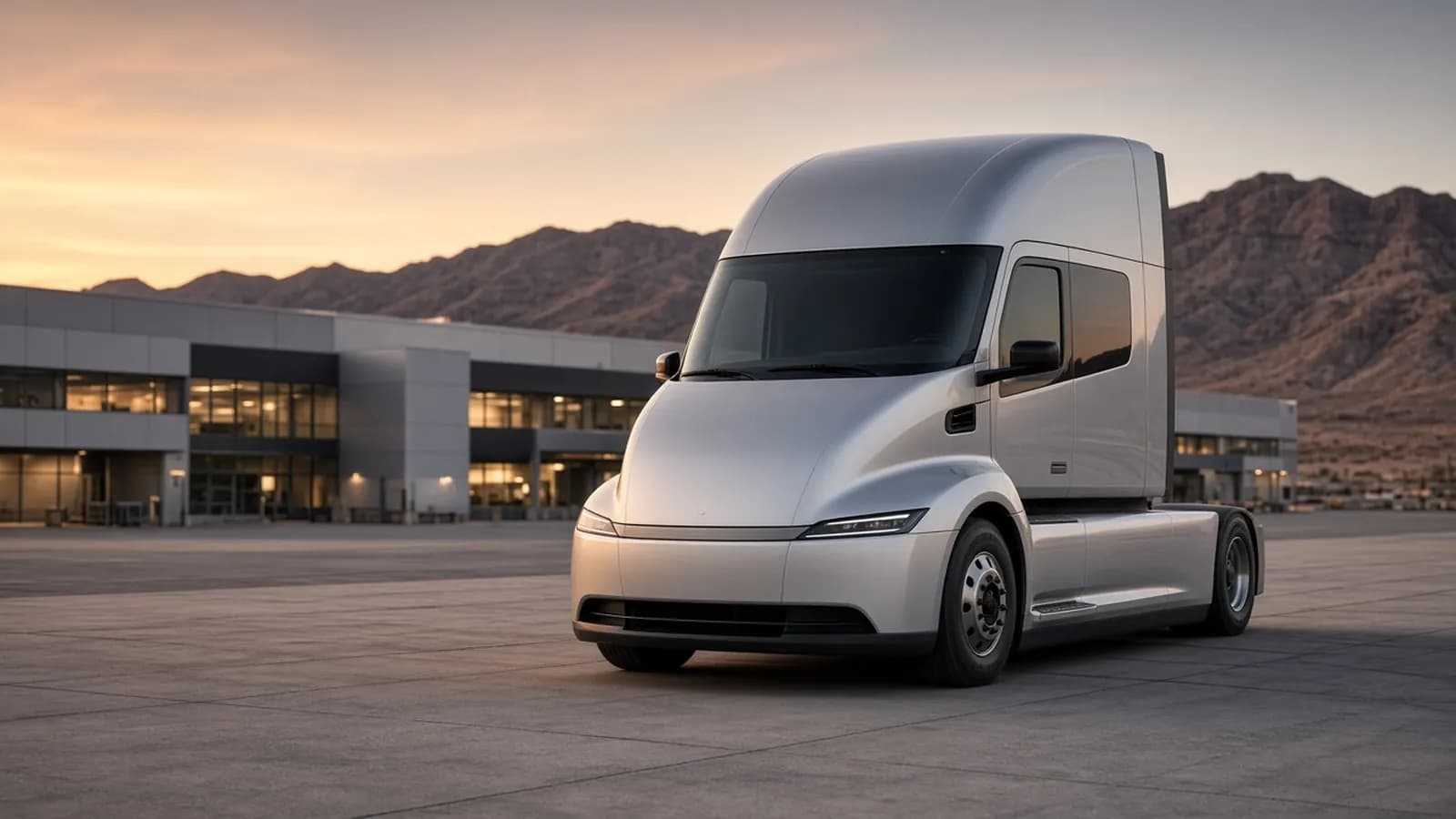
Nearly nine years after it first rolled onto a stage, the Tesla Semi is officially a production truck. On Thursday evening, September 24, Tesla held an invite-only, livestreamed "Semi Rollout" event at its dedicated Semi factory next to Gigafactory Nevada in Sparks. It told fleet customers and investors that the long wait is over and that first customer deliveries began this week.
The event was aimed squarely at the people who buy trucks by the hundred. Fleet executives walked across the stage to be thanked for their orders. Engineers spent most of the evening on efficiency, drivetrain and uptime numbers instead of spectacle.
Elon Musk wasn't there. He appeared in a prerecorded video because he was attending a White House state dinner for Chinese President Xi Jinping, according to Wired and The Verge. In the video he called the Semi "a driver's truck" and said it's "like a sports car in truck form."
What Tesla didn't say matters almost as much as what it did. There was no official price, no order backlog figure and no production rate. Here's what we know, and what fleets and EV watchers should look for next.
Two trims, confirmed at full weight
Tesla revealed the final production design in February, and the event confirmed the lineup. There are two trims: a Standard Range truck rated for 325 miles and a Long Range model rated for 500 miles. Both figures assume a fully loaded 82,000-pound gross combination weight, which is the US legal limit for a Class 8 rig.
Dan Priestley, who leads the Semi program, stressed that the 500-mile figure comes from a fully loaded truck. It isn't a light-payload best case. Lars Moravy, Tesla's vice president of vehicle engineering, said a Long Range Semi hauling a lighter load of around 60,000 pounds could get close to 600 miles, as reported by The Verge.
Tesla says the loaded truck now uses about 1.7 kWh per mile. Its original target was 2 kWh per mile. That efficiency gain is why Tesla can fit a smaller, lighter and cheaper battery without losing range.
| Spec | Semi Standard Range | Semi Long Range |
|---|---|---|
| Rated range (82,000 lb GCW) | 325 miles | 500 miles |
| Usable battery (CARB filing) | 548 kWh | 822 kWh |
| Cell type | Tesla 4680 (NCMA) | Tesla 4680 (NCMA) |
| Drive | Tri-motor, 800 kW peak | Tri-motor, 800 kW peak |
| Energy use (Tesla figure) | About 1.7 kWh/mile | About 1.7 kWh/mile |
| Peak charging | Megacharger, up to 1.2 MW | Megacharger, up to 1.2 MW |
| Reported price (not official) | About $260,000 | About $290,000 |
The battery sizes come from a California Air Resources Board executive order, first reported by Electrek in May. The prices come from Electrek's reporting on customer quotes and California voucher program data. Tesla still hasn't published official pricing.
What changed under the skin
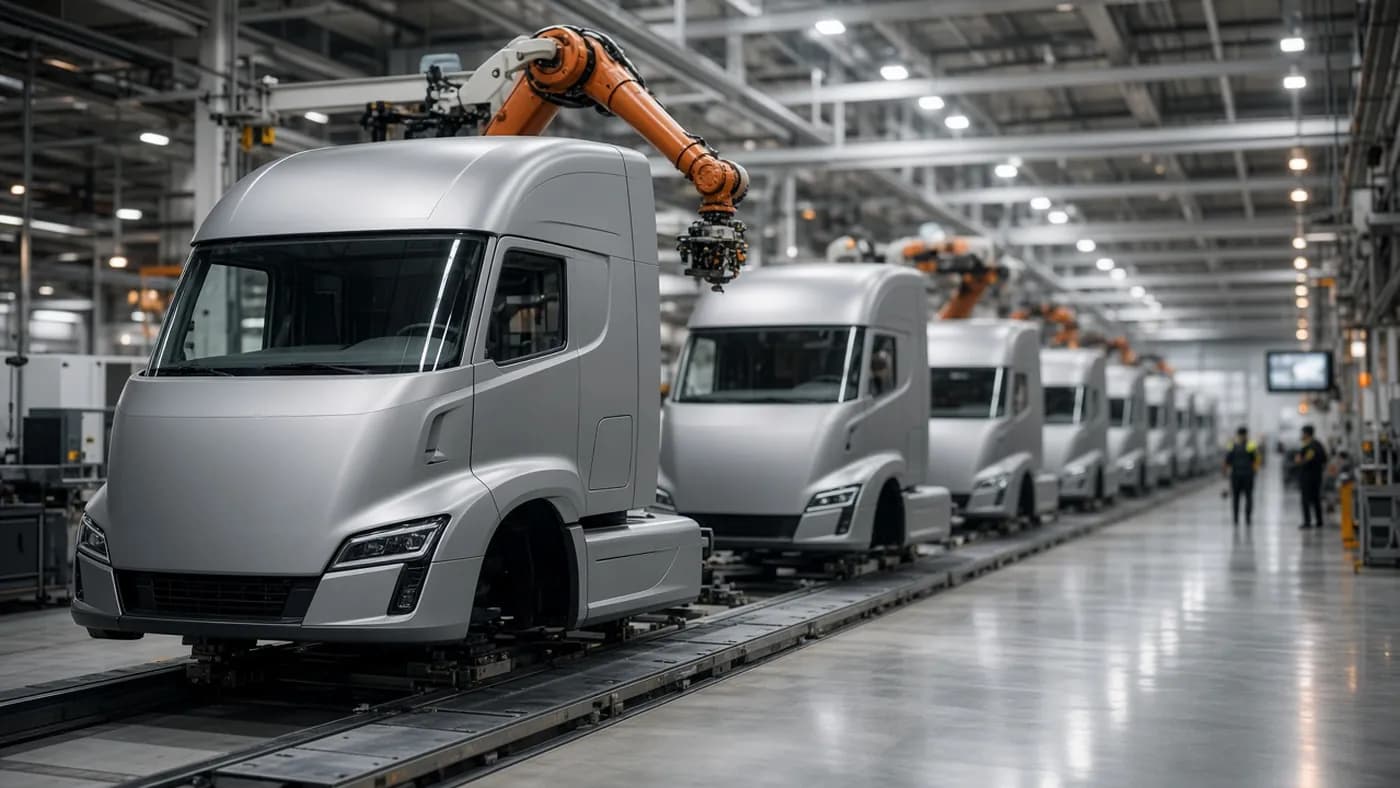
The production Semi is a very different truck from the pilot units PepsiCo started running in 2022. Those early trucks were mostly built by hand on a pilot line. Tesla says it spent the past three years refining the design and cut nearly 1,000 pounds of weight.
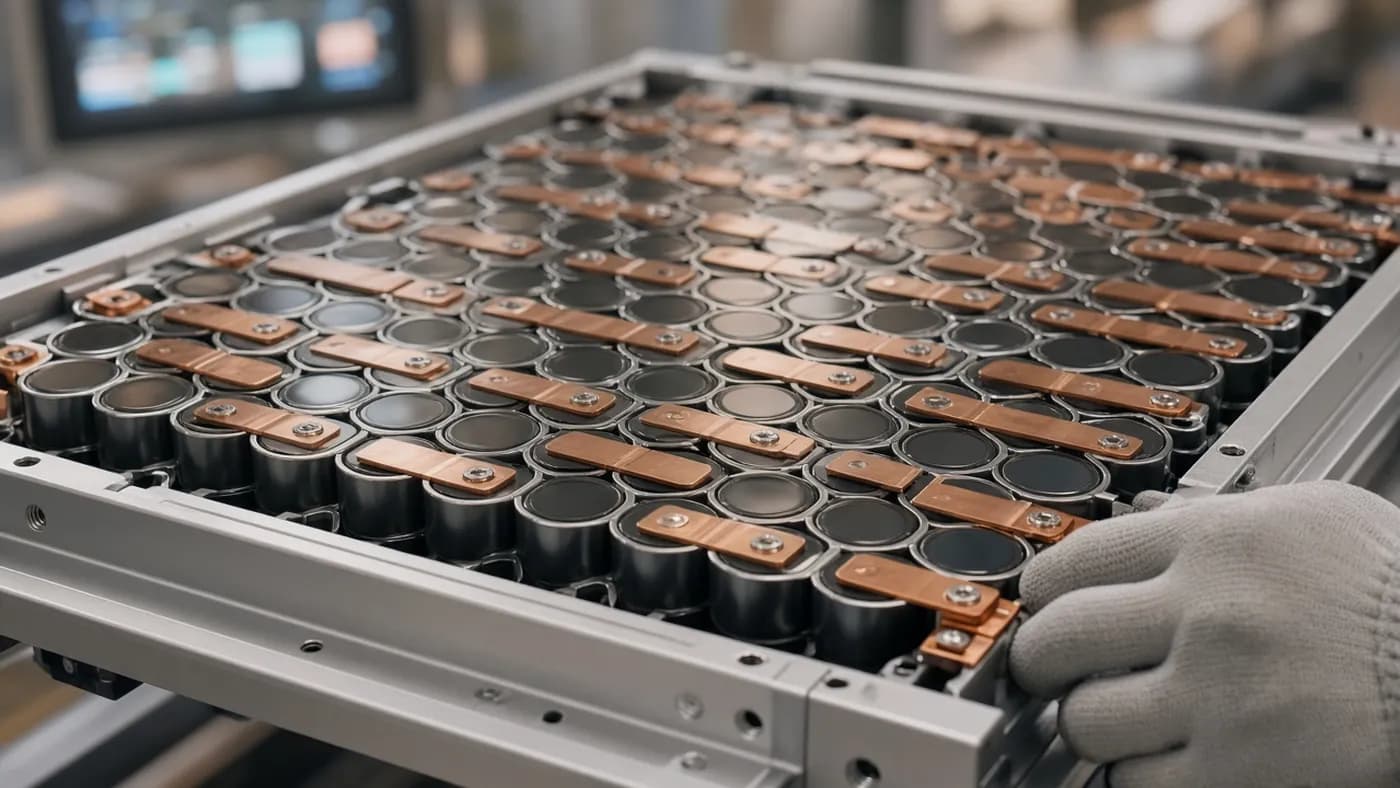
The biggest change is the battery. The Semi now uses Tesla's in-house 4680 cells instead of the purchased 2170 cells in earlier test trucks. Tesla says the switch, along with efficiency work elsewhere in the truck, gives it a lower-mass, lower-capacity pack without giving up range.
The drivetrain has also been reworked. According to The Verge's account of the presentation:
- The motor uses a new steel-caged rotor in place of the earlier carbon-fiber-sleeved design, plus a bar-wound stator shared with Cybertruck.
- The redesigned drive axle is about 80 kilograms lighter.
- The three separate oils in the original axle are gone. There's no oil in the hub, and one common oil for motor and gearbox that Moravy says should last more than 250,000 miles.
- Hydraulic steering has been replaced by redundant electric power steering. Increased wheel cut gives the truck nearly the turning radius of a Model Y.
- The indirect thermal system, including pumps, compressors and heat exchangers, is shared with the Cybercab.
For fleet buyers, the oil and steering changes may matter as much as the battery. Fewer fluids and fewer service items feed straight into Tesla's main argument: lower cost per mile than diesel.
The factory: built for 50,000 a year
Tesla says the Sparks plant can build 50,000 trucks a year, or about 1,000 a week. That's capacity, not output. Tesla didn't say how many Semis it has built since the first truck came off the high-volume line on April 29.
The plant is fairly vertically integrated. Priestley told the ACT Expo audience in May that many body parts are stamped on site, and that the powertrain and e-axle are also built there, according to Transport Topics. At the time, he said Tesla expected to build "many thousands" of Semis by the end of 2026.
Those two figures are far apart. A plant built for 50,000 a year and a year-end target of "many thousands" suggests the line is still in its early ramp. How quickly Tesla closes that gap is the most important production number to watch over the next two quarters.
Key takeaway: Tesla has proven it can build the Semi on a real production line. It hasn't yet proven it can build it at the rate its factory, and its order book, now imply.
Customers, and the 2,500-truck coalition
The event was mostly a customer roll call. Tesla named PepsiCo, US Foods, DHL, WattEV, ABF, Einride, IMC and OK Produce. The Verge notes that a YouTuber flying a drone over the Sparks site had leaked most of those names in advance.
Several big commitments landed in the weeks before the event:
- Einride, August 18: The Swedish freight tech company said it plans to deploy 500 Semis in North America over 24 months, starting in September. Customers include Amazon, and the purchase is financed by a third party.
- IMC Logistics, week of September 21: The drayage operator said it will add 50 Semis in California. Standard Range trucks will run port drayage, and Long Range trucks will serve inland routes.
- ZET SCALE, September 22: A shipper-backed coalition picked Tesla as the primary manufacturer for a 2,500-truck battery-electric order.
The ZET SCALE deal is the headline. The alliance is run by Catalyst Mobility, the nonprofit formerly known as CALSTART, and the Smart Freight Centre. Its founding shippers include Microsoft and PepsiCo, and Transport Topics reports that Ikea and Red Bull are also members. The organizers call it the largest electric truck order in US history. They say it would nearly double the country's electric Class 8 fleet.
The structure is unusual. A financing arm, ZET Financial, buys the trucks and leases them to participating shippers and carriers, which takes residual-value risk off the fleets. First deliveries are due in the fourth quarter of 2026, and Catalyst Mobility told Transport Topics that all 2,500 trucks will be delivered within 18 months. Planned hubs include Los Angeles, Stockton, Bakersfield, Seattle-Tacoma, Houston, Dallas, San Antonio, Chicago, Atlanta and the Newark-New York area.
There's a caveat. Kenworth, RIDE and Volvo were named secondary manufacturers that carriers can pick if the Semi doesn't fit their operations. FreightWaves reported that Catalyst didn't say how many of the 2,500 trucks will actually be Semis. So "up to 2,500" is the more accurate framing.
The alliance says it chose Tesla after scoring bids on price, range, charging capability and production capacity. Its longer-term goal is 10,000 trucks or more.
Megachargers: the other half of the product
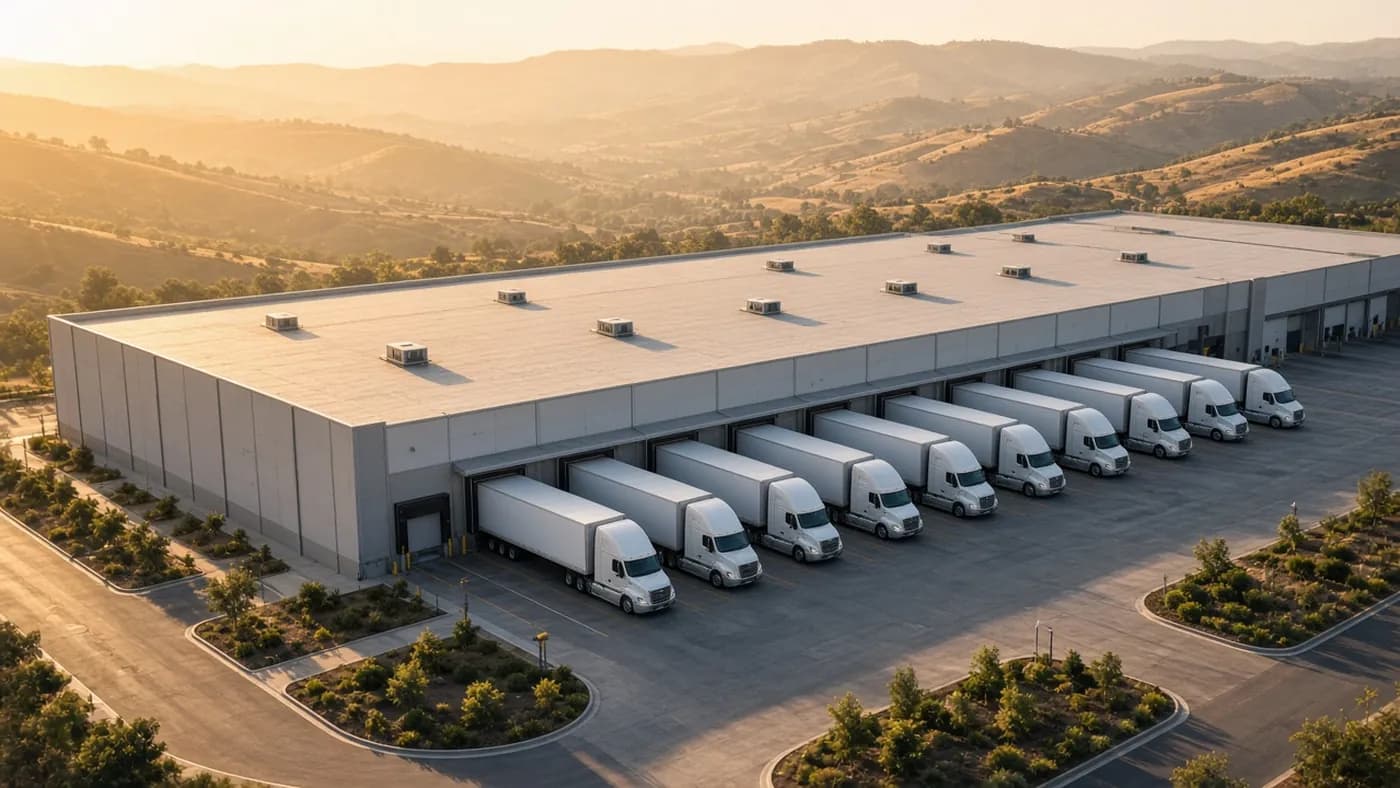
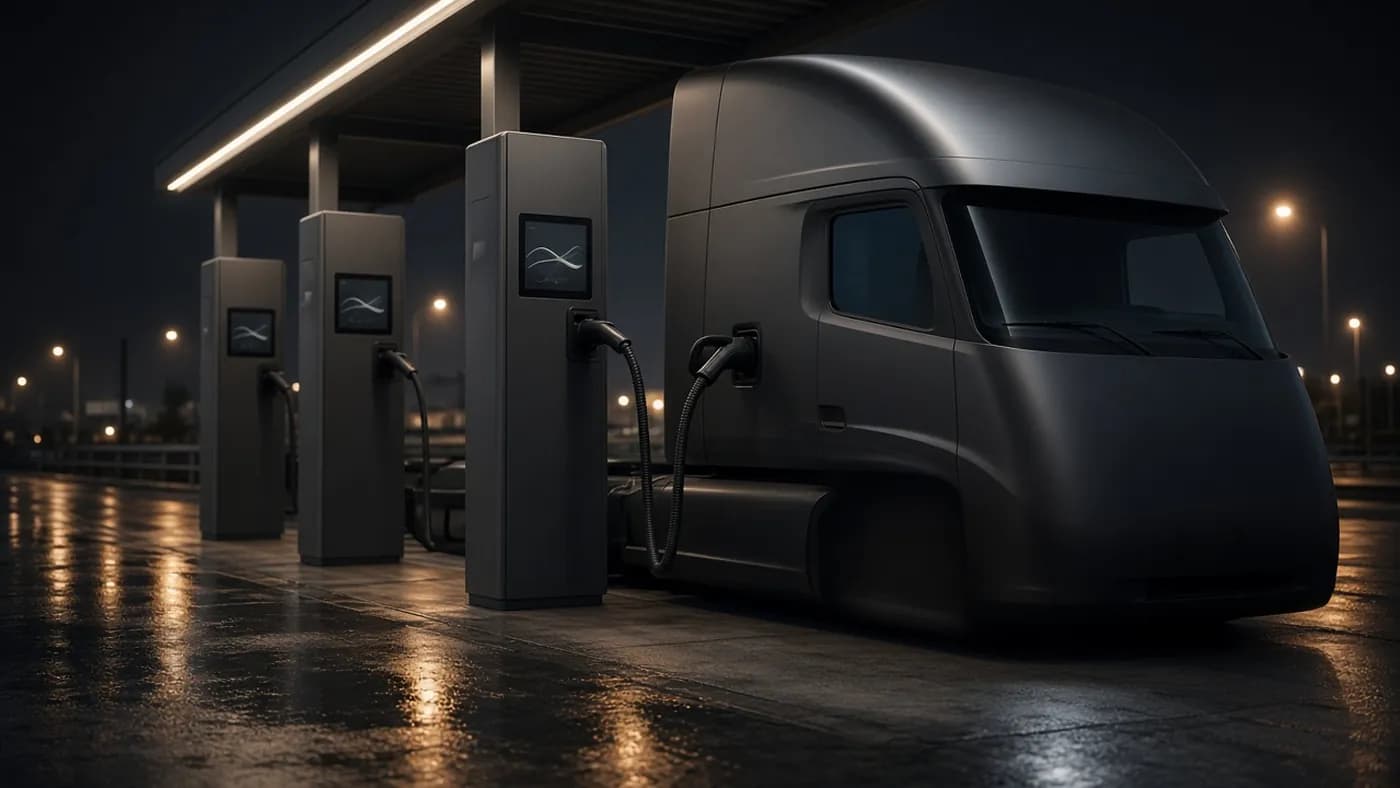
A 500-mile truck with an 822 kWh pack is only useful if you can refill it quickly. Tesla's answer is the Megacharger, which delivers up to 1.2 megawatts per stall through a Megawatt Charging System (MCS) connector.
During the event, Priestley and Moravy kept checking on a Semi plugged into one of the new chargers. They showed it going from 3 to 60 percent in about 30 minutes. That lines up with Tesla's claim that a driver's mandatory rest break can double as a charging stop.
The public network is still small. Wired noted that Tesla's website listed two public Semi chargers in the Los Angeles area. Tesla now says it will have more than 30 Semi charging stations, with over 200 megawatt-capable posts, by the end of the year. Customers can also install their own depot chargers for overnight charging.
Tesla is also selling the Semi as a fleet service, not just a truck. It says its existing Semi fleet has shown more than 98 percent uptime, against an industry average of 90 to 95 percent for diesel Class 8 trucks. It's building dedicated Semi service, mobile service, remote diagnostics and over-the-air updates around the vehicle. Driver-facing features include profiles that follow drivers from truck to truck, and range estimates that adjust to changing payloads.
How it stacks up against the competition
On paper, Tesla's range advantage is real. Wired notes that competing electric semis advertise ranges between 155 and 430 miles. The Long Range Semi's 500 miles at full weight sits above all of them.
Established truck makers still have strengths Tesla lacks. Freightliner, Volvo and Kenworth sell through large dealer and service networks that fleets already use. Their electric models are mostly aimed at regional haul and drayage, where 200 to 300 miles is often enough. The ZET SCALE structure reflects this: carriers already tied to other brands can still pick Kenworth, RIDE or Volvo.
The economics may be moving Tesla's way for now. The Verge reports that US diesel prices have hit record highs above $6.50 a gallon, nearly double a year ago. Moravy leaned into the point on stage: electricity prices have been "pretty flat" over the past 20 years, and he asked, "wouldn't it be great to have a flat cost in your shipping rates?"
Policy is less helpful. Wired notes that federal EV support was cut sharply last year, and that the administration is working to loosen truck emissions standards. That leaves electric trucks competing on operating cost more than on mandates or subsidies.
The open questions
For all the engineering detail, the event left some big gaps.
Price. Tesla hasn't updated its 2017 prices of $150,000 for a 300-mile truck and $180,000 for the 500-mile version. Electrek reported in February that Tesla was quoting $290,000 for the Long Range model, and California voucher data puts the Standard Range near $260,000. Until Tesla publishes prices, total cost of ownership comparisons depend on those reported numbers.
Full Self-Driving. Full Self-Driving (Supervised) is not yet available on the Semi. Musk said in his video that it would arrive in "the very near future." Tesla has a long history of missing its own autonomy timelines, and heavy trucks face much stricter safety scrutiny, so fleets shouldn't factor it into near-term buying decisions.
Order book. Musk said the "waiting list is significant" but gave no number. Without firm orders or a weekly production rate, it's hard to judge how quickly Tesla can deliver the Einride, IMC and ZET SCALE commitments on schedule.
Battery durability. The 4680 cell is new to heavy-duty duty cycles. Electrek has flagged that its long-term reliability in commercial trucking is still something to watch.
Geography. North America is the only market for now. Transport Topics reports that European deliveries are planned for late 2027.
FAQ
When do Tesla Semi deliveries start?
Tesla says first customer deliveries of volume-production trucks started the week of September 21, 2026. The ZET SCALE coalition expects its first trucks in the fourth quarter of 2026, and Einride began phased deployments in September.
How much does the Tesla Semi cost?
Tesla hasn't announced official pricing. Electrek reported that Tesla quoted customers $290,000 for the 500-mile Long Range version. California voucher program data puts the 325-mile Standard Range at around $260,000.
How big is the Tesla Semi battery?
According to a California Air Resources Board filing reported by Electrek, the Long Range Semi has an 822 kWh usable pack and the Standard Range has 548 kWh. Both use Tesla's 4680 cells.
How fast does the Semi charge?
Tesla's Megacharger delivers up to 1.2 MW. Tesla says it can restore up to 60 percent of range in about 30 minutes, and it showed a 3 to 60 percent charge in roughly half an hour during the event.
Does the Tesla Semi have Full Self-Driving?
Not yet. Full Self-Driving (Supervised) is not available on the Semi. Musk said it would come in "the very near future" but gave no date.
The bottom line
The Tesla Semi is finally a real product with a real factory behind it, and it arrives at a good moment: diesel prices are at records and shippers are pooling demand for electric trucks. The specs are strong, especially 500 loaded miles and megawatt charging.
The next test is execution. Watch for official pricing, a weekly production rate and how many of the coalition's 2,500 trucks actually turn out to be Semis. Those will show whether this launch is a turning point for electric freight or another promising start.



Join the conversation