
Nvidia just posted another quarter that would have sounded absurd two years ago. For the second quarter of fiscal 2027, which ended July 26, the company reported revenue of $96.2 billion, up 106% from a year earlier and 18% from the previous quarter.
The bigger news came after the numbers. Nvidia guided to $108 billion for the current quarter, said its Vera Rubin platform is now in full production, and, unusually, put a number on next year: roughly 70% revenue growth in fiscal 2028.
That combination tells you where the AI hardware cycle is heading. It also carries a warning about memory prices that reaches well beyond the data center.
The headline numbers
Nvidia's results beat Wall Street on every major line. According to LSEG data cited by Reuters, analysts expected $92.17 billion in revenue and adjusted earnings of $2.10 per share. Nvidia delivered $96.2 billion and $2.22.
Data center revenue, the part of the business that sells GPUs, CPUs, networking and full racks to cloud providers and AI labs, came in at $89.0 billion. Analysts had pencilled in $85.08 billion.
| Metric | Q2 FY2027 | Q1 FY2027 | Q2 FY2026 | Change y/y |
|---|---|---|---|---|
| Total revenue | $96.2B | $81.6B | $46.7B | +106% |
| Data Center | $89.0B | $75.2B | $41.1B | +117% |
| Hyperscale | $48.7B | $43.1B | $24.2B | +102% |
| AI clouds, industrial and enterprise | $40.3B | $32.2B | $16.9B | +138% |
| Edge Computing | $7.2B | $6.4B | $5.6B | +27% |
| GAAP gross margin | 75.0% | 74.9% | 72.4% | +2.6 pts |
| Non-GAAP EPS | $2.22 | $1.87 | $1.01 | +120% |
| Free cash flow | $21.3B | $48.6B | $13.5B | +59% |
GAAP earnings per share were $2.46, higher than the adjusted figure because they include about $7.8 billion in gains on Nvidia's equity investments. Note that starting this fiscal year, Nvidia's non-GAAP numbers no longer strip out stock-based compensation, which makes the adjusted figures a little more conservative than in past years.
Where the growth came from
Nvidia now splits data center sales into two buckets. Hyperscale covers the public clouds and the biggest consumer internet companies. ACIE, short for AI clouds, industrial and enterprise, covers neoclouds such as CoreWeave and Nebius, sovereign projects, AI-native companies and corporate buyers.
Both grew, but ACIE grew faster: up 25% sequentially versus 13% for hyperscale. Nvidia's CFO commentary credits "end-demand from AI natives, enterprises, and sovereign customers, as well as hyperscalers utilizing AI clouds."
The quarter was still powered by Blackwell. Nvidia says the ramp of Blackwell Ultra drove the data center gain, and that Blackwell "remains the vast majority of our revenue." Vera Rubin only started contributing this quarter.
On the call, CFO Colette Kress said neoclouds are on track to exit the year with more than eight gigawatts of Nvidia GPU capacity, up from three gigawatts at the end of last year, according to Reuters. Nvidia also expects AI labs to account for roughly a quarter of its business next year.
Vera Rubin: full production and a fast ramp
CEO Jensen Huang framed the quarter around the new platform. "The AI infrastructure buildout is at full steam. Vera Rubin, now in full production, was built to power exactly this moment," he said in the earnings release.
According to the call transcript, Nvidia began production shipments of Vera Rubin earlier this month and has purchase orders from every major hyperscaler, AI cloud and system maker. The company says racks are already running at CoreWeave, Google Cloud, Microsoft Azure, Oracle Cloud Infrastructure and Nebius.
Kress said Vera Rubin should account for about 20% of data center revenue in the current quarter, and that Nvidia expects it to be the fastest product ramp in the company's history. Growth in the current quarter will lean on ACIE customers, with hyperscale expected to reaccelerate in the fourth quarter as Vera Rubin supply grows.
Nvidia's own performance claims are aggressive: 30 times higher throughput per megawatt and 35 times lower token costs than Grace Blackwell Ultra. Those are vendor figures and have not been independently verified.
The more telling number is about wallet share. Kress said Nvidia's revenue opportunity per gigawatt of AI capacity has grown from about $18 billion with Hopper to $25 billion with Blackwell and roughly $40 billion with Vera Rubin. That jump comes from selling more of the rack: the Vera CPU, Rubin GPU, NVLink, networking and now Groq-derived LPU inference systems.
Key takeaway: Nvidia is not just selling more GPUs. With Vera Rubin, it says it captures about $40 billion per gigawatt of AI capacity, more than double the Hopper era, by owning the CPU, networking and inference accelerators too.
Vera CPU and Groq 3 LPX
Two newer products got notable airtime. Nvidia said shipments of its standalone Vera CPU, which it pitches as a processor built for AI agents, are underway to lead partners including Oracle Cloud Infrastructure and SpaceXAI, with AWS starting this quarter. Kress said Nvidia's preliminary expectation is for CPU revenue to "more than double" in fiscal 2028.
Nvidia also said Groq 3 LPX, its first rack-scale LPU system for low-latency inference, is in full production and should ship in volume to early adopters later this quarter.
The company also announced an expanded AWS deal: Amazon will deploy an additional 2 million Nvidia GPUs, along with Vera CPUs, from this quarter through the second quarter of fiscal 2029.
The outlook: $108 billion and a rare one-year forecast
For the third quarter of fiscal 2027, Nvidia expects revenue of $108.0 billion, plus or minus 2%. Analysts polled by LSEG had expected $104.19 billion, per Reuters.
As in recent quarters, the guidance assumes no data center compute revenue from China. Nvidia said Hopper shipments to China were less than 1% of data center revenue in the second quarter, and Kress cited "ongoing geopolitical uncertainty" for leaving China out of the forecast.
Then came the fiscal 2028 call. "Our preliminary expectation is for fiscal year '28 revenue to grow approximately 70% year-over-year," Kress said, adding that supply would remain a bottleneck "at least through the end of fiscal year '28."
Huang acknowledged the move was unusual. "We've never forecast or never guided to a year in advance," he said, according to Reuters. Analysts had, on average, projected 44% growth for the same period.
Nvidia was explicit that 70% is a supply number, not a demand number. Kress said customers' forecasts point to growth doubling, but Nvidia can only confidently deliver about 70% with the components it has secured.

The catch: memory costs and margins
The one soft spot was gross margin guidance, and memory is the reason.
Nvidia guided third-quarter gross margin to 74.0%, plus or minus half a point, below the 74.77% analysts expected, according to Reuters. Kress said margins should bottom in the fourth quarter at roughly 71% to 72%, then settle at 72% to 73% in fiscal 2028 as price increases Nvidia has already executed take effect.
"We are experiencing extreme pricing conditions in memory," Kress said. "The magnitude of the price increase has exceeded our prior expectations and are headed even higher into next year."
The balance sheet shows how hard Nvidia is leaning into supply. Its purchase commitments jumped from $119 billion last quarter to $279 billion, "primarily related to the procurement of memory," according to the CFO commentary. Inventory rose to $31.6 billion from $25.8 billion as the company prepares for the Vera Rubin ramp.
That also explains why free cash flow fell to $21.3 billion from $48.6 billion in the prior quarter. Nvidia cites higher working capital and cash taxes, and days sales outstanding rose to 60 from 45 because of extended payment terms on large multi-quarter deals with certain investment-grade customers.
Financing the buildout
Nvidia is also increasingly acting as a financier of its own demand. It announced partnerships with Apollo, BlackRock, Blackstone, Brookfield, Goldman Sachs and KKR to set up compute financing platforms intended to mobilize more than $500 billion of third-party capital over time, subject to definitive agreements.
Separately, the CFO commentary discloses guarantees of up to $105 billion supporting roughly 4.25 gigawatts of data center capacity at SB Energy's campus in Ohio, which will host Nvidia infrastructure leased to OpenAI. Those guarantees phase in as sites come online, with the first expected in fiscal 2029.
Nvidia returned about $26.0 billion to shareholders in the quarter through buybacks and dividends, issued $25.0 billion in senior notes, and will pay a quarterly dividend of $0.25 per share on October 1.
What it means for the AI buildout
The message from this report is that the AI infrastructure boom is widening rather than peaking. Demand is no longer concentrated in a handful of hyperscalers; neoclouds, sovereign projects, enterprises and AI labs are now growing faster.
Here is how to read the signals:
- Demand is broadening. ACIE revenue grew 138% year over year, outpacing hyperscale.
- Supply, not demand, is the constraint. Nvidia says it could grow faster if it had more memory, packaging and data center capacity.
- Costs are rising down the chain. Memory scarcity is squeezing even Nvidia's margins, and other buyers of DRAM have less pricing power.
- Nvidia is moving into CPUs and inference silicon. Vera and Groq 3 LPX put it in more direct competition with Intel, AMD and custom chips from the clouds.
Investors appeared to like the balance. Nvidia shares rose nearly 5% in extended trading after initially dipping more than 1%, according to Reuters. Regular trading on Thursday will be the real test.
What it means for PC gamers
If you came here for GeForce news, there is very little to find, and that is itself the story.
Nvidia no longer reports a standalone Gaming segment. Since its first-quarter results in May, GeForce sales have been folded into Edge Computing, which also includes workstations, game consoles, AI-RAN base stations, robotics and automotive. As TweakTown noted, this quarter's release did not mention GeForce or gaming at all.
Edge Computing revenue rose 27% year over year to $7.2 billion. But Nvidia's CFO commentary says that growth was "driven by strong sales of Blackwell workstations, partially offset by slower consumer PC sales that were tempered by elevated memory and systems prices."
In plain English: professional workstation cards carried the segment, while consumer PC demand, which includes gaming rigs, softened because memory and complete systems have become more expensive. Nvidia did not break out how much of the $7.2 billion came from GeForce, so it is impossible to say from these numbers whether gaming GPU revenue grew or shrank.
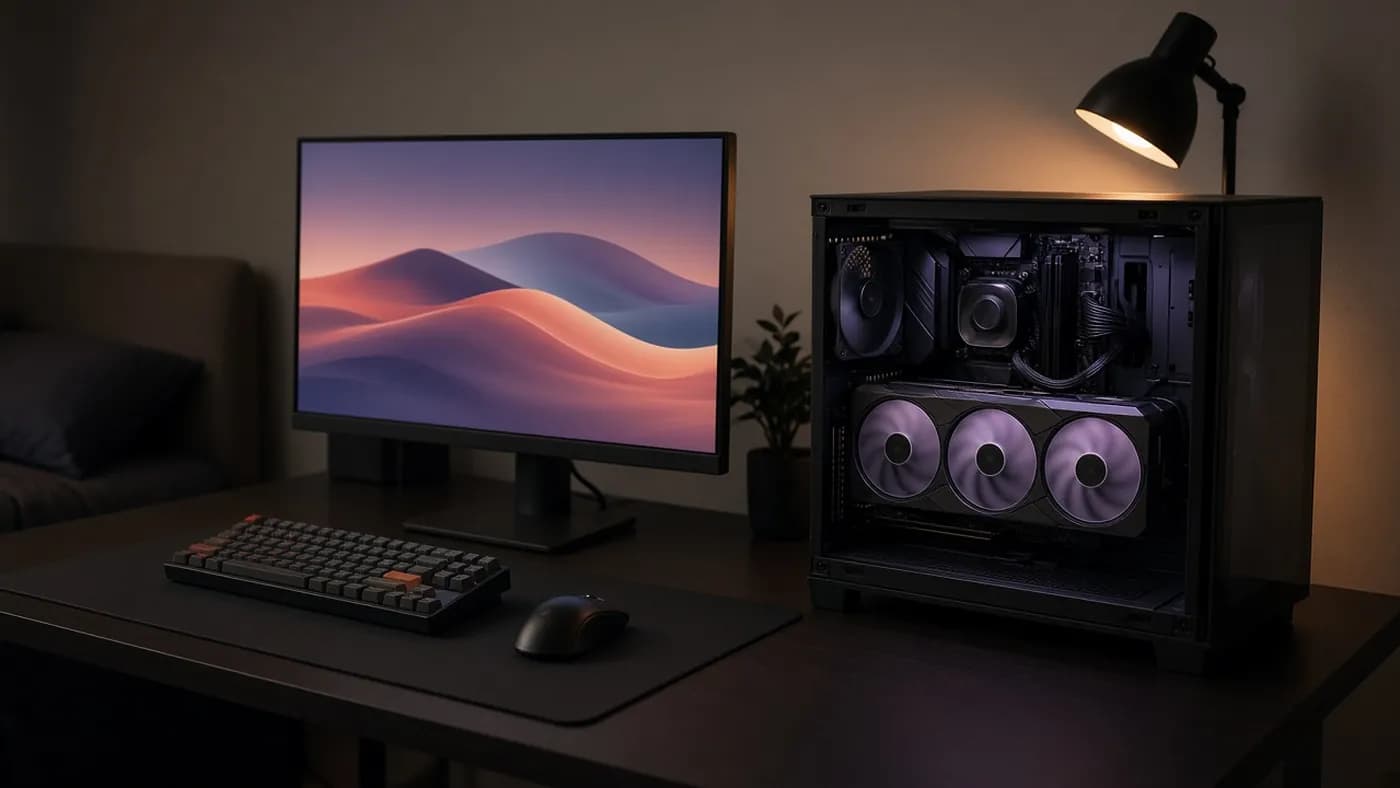
The practical takeaway for buyers is about memory. Kress's warning that memory prices are "headed even higher into next year" came in the context of data center components, but graphics cards and PCs draw on the same constrained supply of DRAM. Nvidia did not announce any GeForce price changes, so anything beyond that is speculation. Still, nothing in this report suggests relief on GPU or system pricing is imminent.
On the consumer-adjacent side, the release highlighted RTX Spark, a partnership with Microsoft on a Windows PC superchip, and a push to optimize popular open AI models for local use on RTX and DGX hardware. Nvidia's consumer attention is clearly shifting toward local AI.
FAQ
How much revenue did Nvidia make in Q2 fiscal 2027?
Nvidia reported $96.2 billion in revenue for the quarter ended July 26, 2026, up 106% year over year. Data center revenue was $89.0 billion, up 117%.
What is Nvidia's guidance for the next quarter?
Nvidia expects third-quarter fiscal 2027 revenue of $108.0 billion, plus or minus 2%, with gross margins of about 74.0%. The outlook excludes any data center compute revenue from China.
What did Nvidia say about fiscal 2028?
CFO Colette Kress said Nvidia's preliminary expectation is about 70% revenue growth in fiscal 2028, which ends in January 2028. She described it as a supply-constrained outlook, meaning demand is higher than what Nvidia expects to ship.
Is Vera Rubin shipping?
Yes. Nvidia says Vera Rubin is in full production, began production shipments this month, and should account for about 20% of data center revenue in the current quarter.
How is Nvidia's gaming business doing?
Nvidia no longer discloses gaming revenue separately. GeForce sits inside the $7.2 billion Edge Computing segment, where Nvidia says workstation strength was partly offset by slower consumer PC sales due to higher memory and system prices.
The bottom line
Nvidia's second quarter confirmed what the market hoped: the AI buildout is still accelerating, Vera Rubin is on schedule, and demand is spreading beyond the largest cloud companies. The 70% growth forecast is a statement of confidence that few chipmakers would dare to make a year out.
The caveats are real, though. Memory costs are biting into margins, Nvidia is taking on far larger supply and financing commitments, and China remains off the table. For PC gamers, the report offers no good news on pricing and far less visibility into GeForce than before. The data center is Nvidia's business now, and the rest of the industry is paying for its memory appetite.


Join the conversation