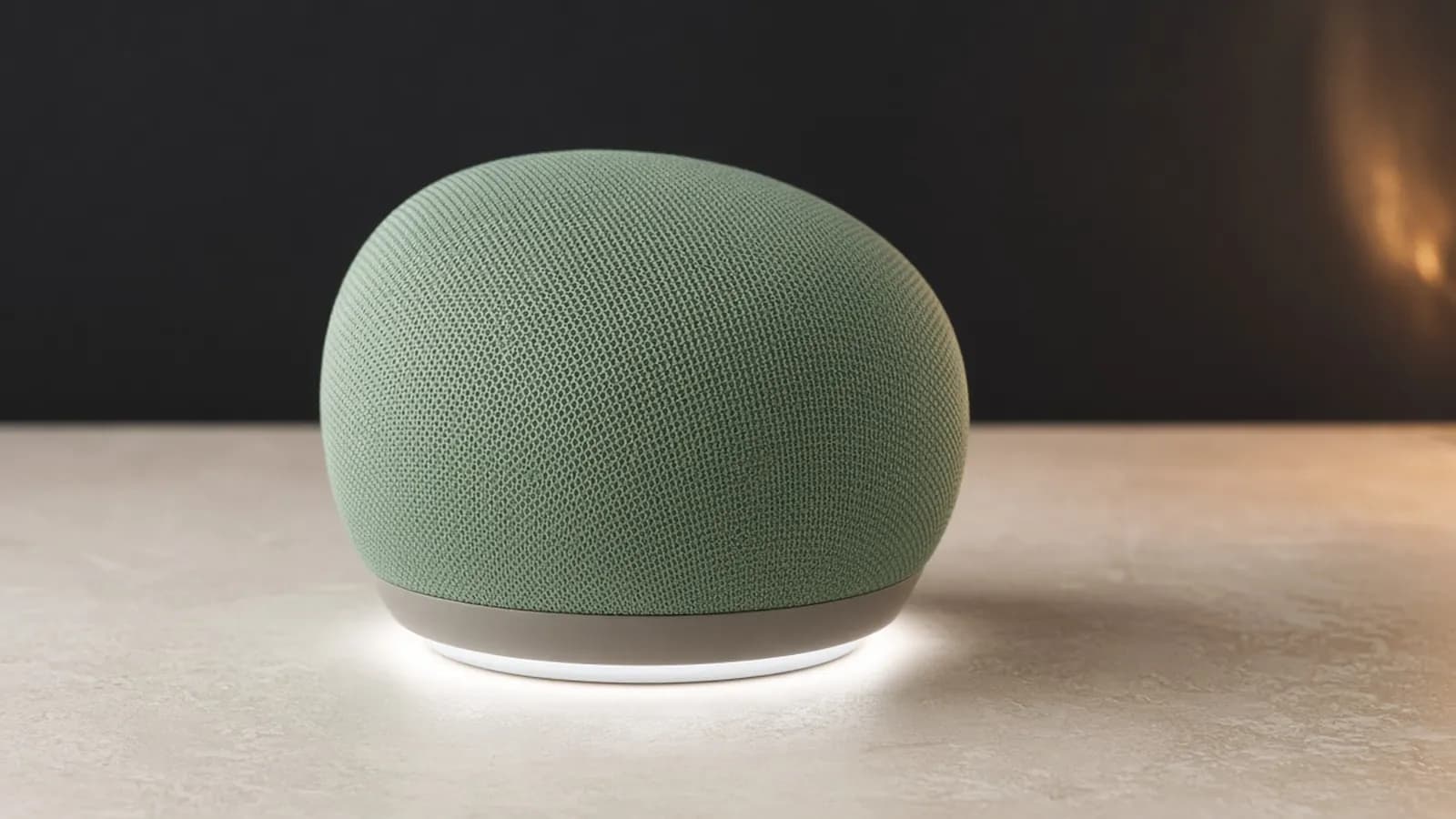
Google has not released a new smart speaker since the Nest Audio in 2020. The Google Home Speaker ends that drought, and it arrives with a specific mission: to be the first speaker "built for Gemini," Google's new AI-powered voice assistant for the home.
Preorders opened on June 17, 2026, and the speaker reached shelves on June 25 for $99.99. It effectively replaces both the $49 Nest Mini and the $99 Nest Audio, as Engadget points out, which means Google's cheapest speaker now costs twice as much.
We have gone through the major reviews from The Verge, Engadget, PCMag, SoundGuys, Android Authority, Android Central, and BGR. The verdict is unusually split: most reviewers like the hardware, few are happy with the software, and audio specialists are the harshest critics.
Design and build
The Home Speaker is a small, slightly squashed orb wrapped in 3D-knit fabric. PCMag measures it at 4.2 inches in diameter and 3.4 inches tall, weighing 0.9 pounds, and says it feels "a bit like a softball."
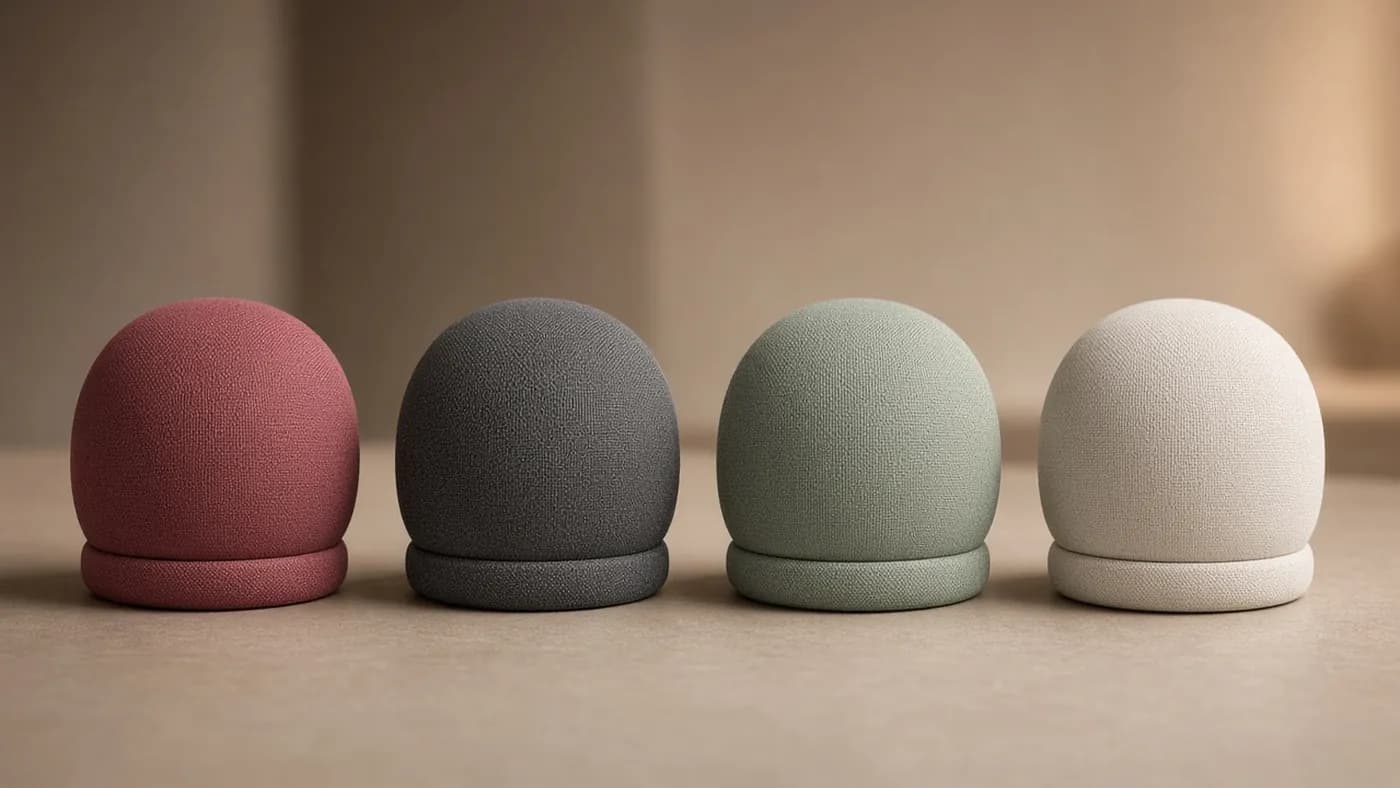
It comes in four colors: Hazel, Porcelain, and the US-only Jade and Berry. Google says the speaker uses at least 37 percent recycled materials, and its environmental report says the fabric uses about 63 percent less material and 99 percent less adhesive than the first Nest Audio.
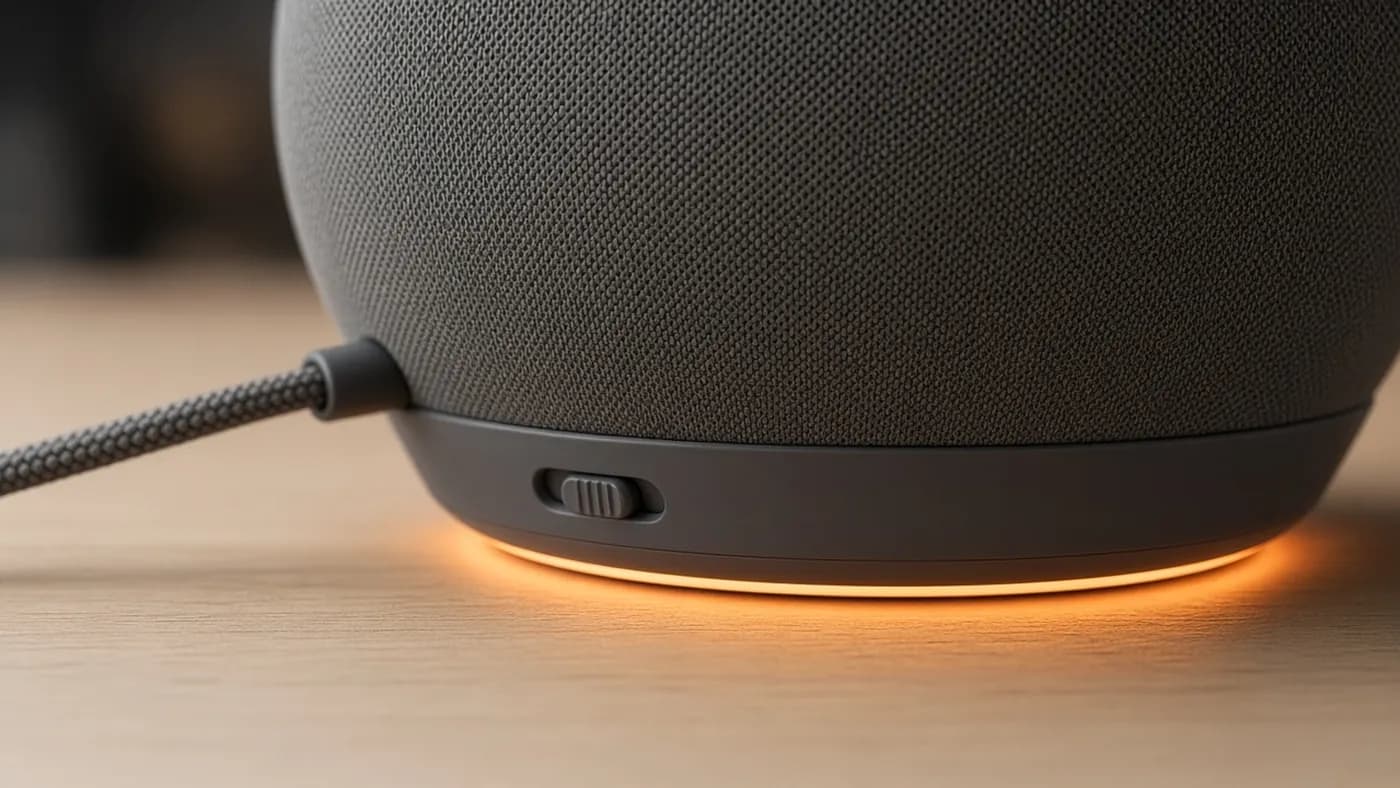
The design details are thoughtful. A light ring on the underside glows onto the surface below, which PCMag says turns white while listening, cycles through blues and purples while thinking, and goes orange when the mic is muted.
Power comes through an attached 1.5-meter cable from a 30W USB-C adapter, according to The Verge. A physical toggle on the base mutes the microphones. Google's store page notes the speaker can still play audio while muted, which is handy if you want music without an always-listening assistant.
Touch controls
The top of the speaker hides three touch zones under the fabric: tap the center to play or pause, and tap the sides to change volume. Small white lights shine through to guide you.
PCMag found the controls responsive but sometimes too sensitive, and says it changed the volume by accident when picking the speaker up. That is a small but real annoyance for something you might move between rooms.
Sound quality
Inside is a single 58mm full-range driver. Google claims it is up to twice as large as the Nest Mini's driver, with 2.5 times the bass, and that the speaker can fill mid-sized rooms.
Reviewers largely agree it is a big step up from the Nest Mini. PCMag, which gave it an Editors' Choice award, heard no distortion at high volume and praised "surprisingly strong bass" for the size. Engadget found it significantly louder than a HomePod mini, with more bass presence, and comparable to Amazon's Echo Dot Max.
PCMag's music tests back that up. On its bass test track, The Knife's "Silent Shout," the mids and lows came through clearly, and the speaker got loud enough to fill a room at medium volume. It also picked out the acoustic twang of Yes' "Roundabout" and the full instrumentation of Simon and Garfunkel's "The Boxer."
Google says it was not trying to beat the Nest Audio, just to deliver similar quality in a smaller package. PCMag thinks it succeeded, but most other reviewers disagree.
The problem is the Nest Audio. That speaker had a 75mm woofer and a separate 19mm tweeter, and SoundGuys, Android Authority, and The Verge all say the new model sounds worse. SoundGuys calls it "a smarter assistant and a worse speaker" than the Nest Audio.
If you are coming from a Nest Mini, the Home Speaker is a clear audio upgrade. If you own a Nest Audio, expect a step down in sound, not a step up.
Home theater pairing
The Home Speaker is the first Google speaker that can act as audio output for a Google TV Streamer. You can use one, pair two for stereo, or turn on simulated spatial audio with two.
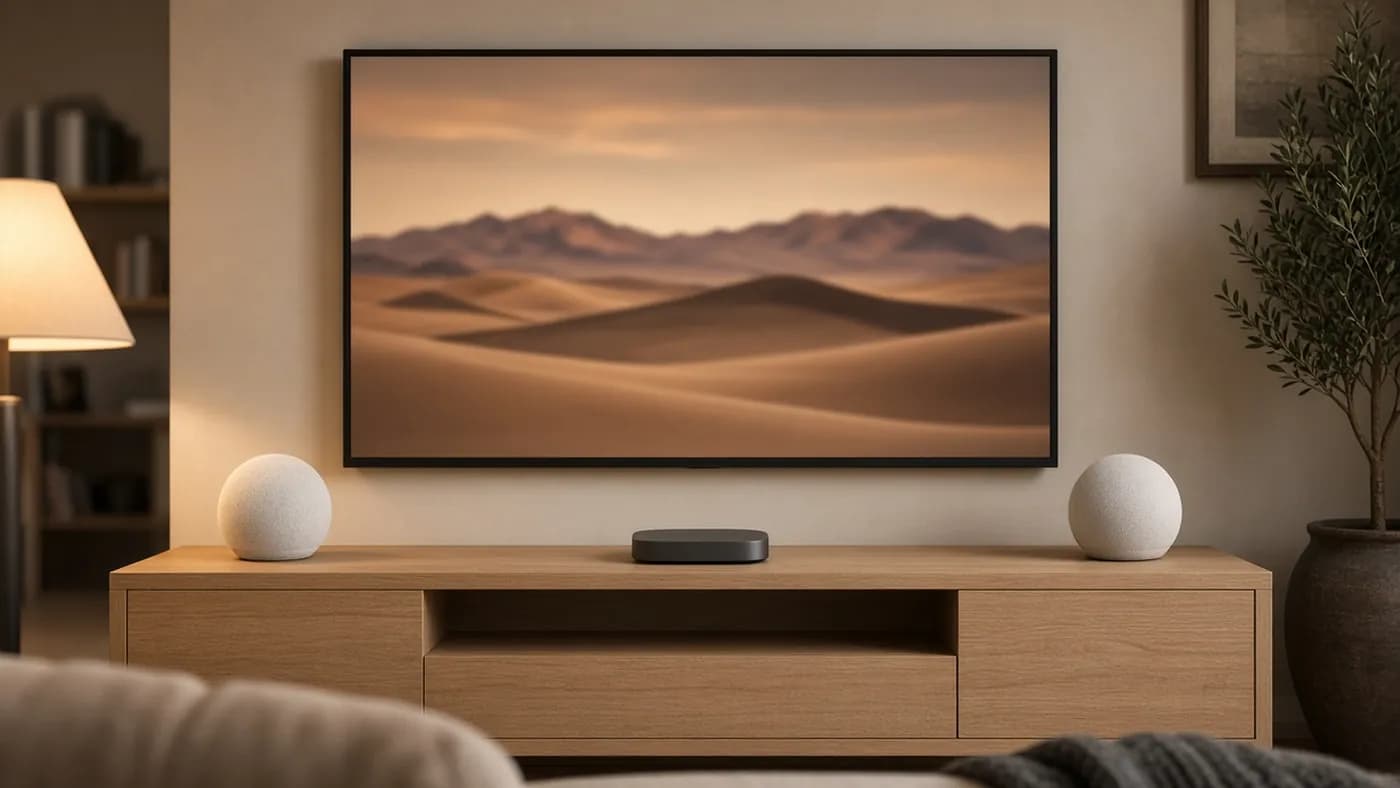
The Verge found sync solid with no dropouts, and dialogue in YouTube videos came through clearly. Sports commentary, though, sounded like it was coming "from a tin can," and The Verge switched back to its Sonos setup.
SoundGuys asked Google what hardware made TV Streamer pairing possible, and Google confirmed it is a software feature. That makes it disappointing that older Nest speakers do not get it.
Gemini for Home
The Home Speaker runs Gemini for Home, which replaces Google Assistant across Google's speakers and displays. Google says it understands natural speech, handles several commands at once, lets you correct yourself mid-sentence, and supports follow-up questions without repeating the wake word.
Reviewers agree that Gemini is easier to talk to and more capable than the old Assistant. Android Central says it is "far more understanding" of commands than Assistant has been for years, and Android Authority says it works very well.

Speed is the problem
Speed is where nearly every review stumbles. The Verge found the Home Speaker no faster than a Nest Audio, with some cloud requests taking close to 10 seconds and even "Turn on the lights" sometimes lagging as long.
Android Central saw most responses in about a second, but timers often took 20 to 25 seconds and adding an item to a grocery list took 5 to 10. BGR clocked about 10 seconds to turn on a light, against roughly half a second for Alexa on its Echo devices.
SoundGuys also reports oddities, including the speaker interrupting conversations to ask for a 1-to-5 rating of its last answer. Google says it has made more than 2,500 fixes to Gemini for Home, and Android Central notes Google is aware of the latency complaints.
Gemini for Home is smarter than Google Assistant, but in reviewers' testing it is often slower. For a device whose main job is responding to your voice, that matters more than anything else.
The subscription question
Basic Gemini for Home is free: music, timers, and smart home control. For the more conversational Gemini Live and the "Help me create" automation builder, you need Google Home Premium Standard at $10 per month or $100 per year.
The Advanced tier, at $20 per month or $200 per year, adds Home Brief and AI camera features for Nest cameras. The speaker includes a trial of up to six months. As The Verge notes, this is the first time Google has put voice assistant features behind a paywall.
It is also worth knowing that Gemini for Home is rolling out to older Nest speakers too. Android Authority and SoundGuys both point out that buying the Home Speaker does not unlock AI features your existing speakers lack.
Smart home hub features
This is where the Home Speaker earns its place. It is a Thread 1.3 border router and a Matter controller, with Wi-Fi 6 and Bluetooth 5.4. Engadget says the Thread support alone makes it a worthwhile upgrade over a Nest Audio if you use Thread devices.
The Verge lists a quad-core A55 processor at 2.0GHz with an NPU, 1GB of memory, and 4GB of storage, plus three far-field microphones. Google told Android Authority those microphones and its AI engine give "better Gemini comprehension and responsiveness" than the Nest Audio.
Setting it up well
To get the most from it:
- Place it in a kitchen, bedroom, or small living room, where reviewers found it fills the space comfortably.
- Add your Thread and Matter devices in the Google Home app so the speaker can act as their hub.
- Turn on Continued Conversation so you can ask follow-ups without repeating "Hey Google."
- Decide before the free trial ends whether you actually use Gemini Live or AI automations.
- Pair two speakers with a Google TV Streamer only if you want a compact TV sound upgrade.
How it compares
At $99.99, the Home Speaker lands at the same price as its two biggest rivals. Your ecosystem matters more than the hardware here.
| Speaker | Price | Assistant | Notes from reviewers |
|---|---|---|---|
| Google Home Speaker | $99.99 | Gemini for Home | Thread and Matter hub, TV Streamer pairing |
| Amazon Echo Dot Max | $99.99 | Alexa+ | Comparable sound per Engadget, faster responses per BGR |
| Apple HomePod mini | $99.99 | Siri | Quieter than the Home Speaker per Engadget |
| Google Nest Audio (discontinued) | $99.99 at launch | Gemini for Home | Better sound, per SoundGuys and The Verge |
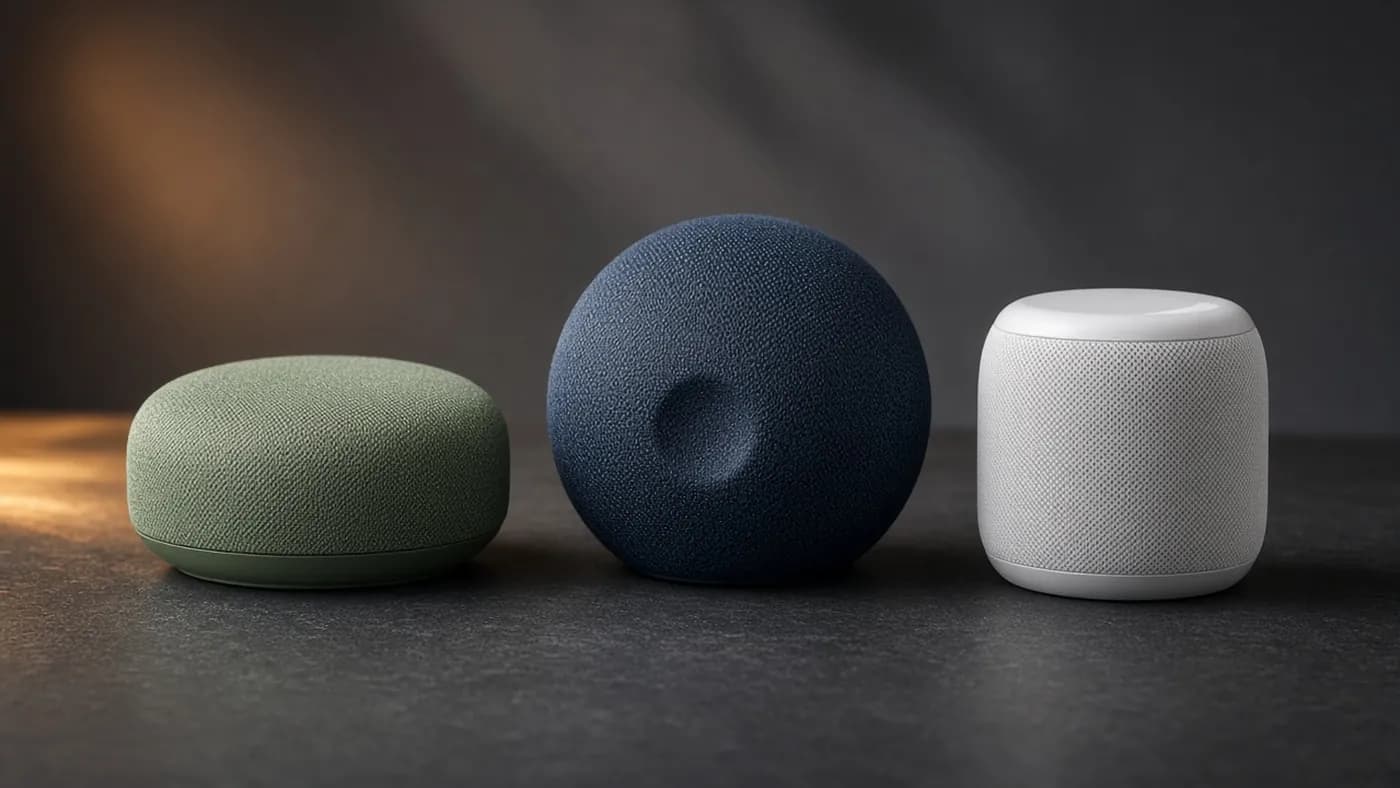
PCMag's take is a useful tiebreaker. It says Alexa users may still find better value in the Echo Dot Max, but for people in Google's ecosystem, the Home Speaker is the strongest option.
Who should buy it
Buy the Home Speaker if you are building a Google Home setup from scratch, want a Thread border router, or are replacing a Nest Mini. It is also a tidy way to add TV sound if you already own a Google TV Streamer.
Skip it if you own a Nest Audio that still works. You will get the same Gemini for Home features on your current speaker, better sound, and no new subscription pitch. And if music is your priority, SoundGuys argues that a good Bluetooth speaker at this price will sound better.
FAQ
How much does the Google Home Speaker cost?
It costs $99.99. Some Gemini features require Google Home Premium, which starts at $10 per month, and the speaker includes a trial of up to six months.
Does the Google Home Speaker sound better than the Nest Audio?
No. Most reviewers, including SoundGuys and The Verge, say the Nest Audio's woofer and tweeter setup sounds better than the Home Speaker's single 58mm driver.
Can I use Gemini for Home without paying?
Yes. Basic commands like music, timers, and smart home control are free. Gemini Live conversations and AI-built automations need a paid Home Premium plan.
Is it a smart home hub?
Yes. It is a Thread 1.3 border router and Matter controller, so it can connect and control compatible smart home devices directly.
Can two speakers work as a stereo pair?
Yes. You can pair two Home Speakers for stereo music, and connect up to two to a Google TV Streamer for stereo or simulated spatial audio.
Final Verdict
The Google Home Speaker is well-designed hardware with a modern smart home radio stack and sound that punches above its size. As The Verge puts it, it is a great smart speaker waiting for its AI to catch up.
Until Gemini for Home gets faster and less reliant on a subscription, it is a solid pick for new Google Home users and a hard sell for anyone who already owns a Nest Audio.


Join the conversation