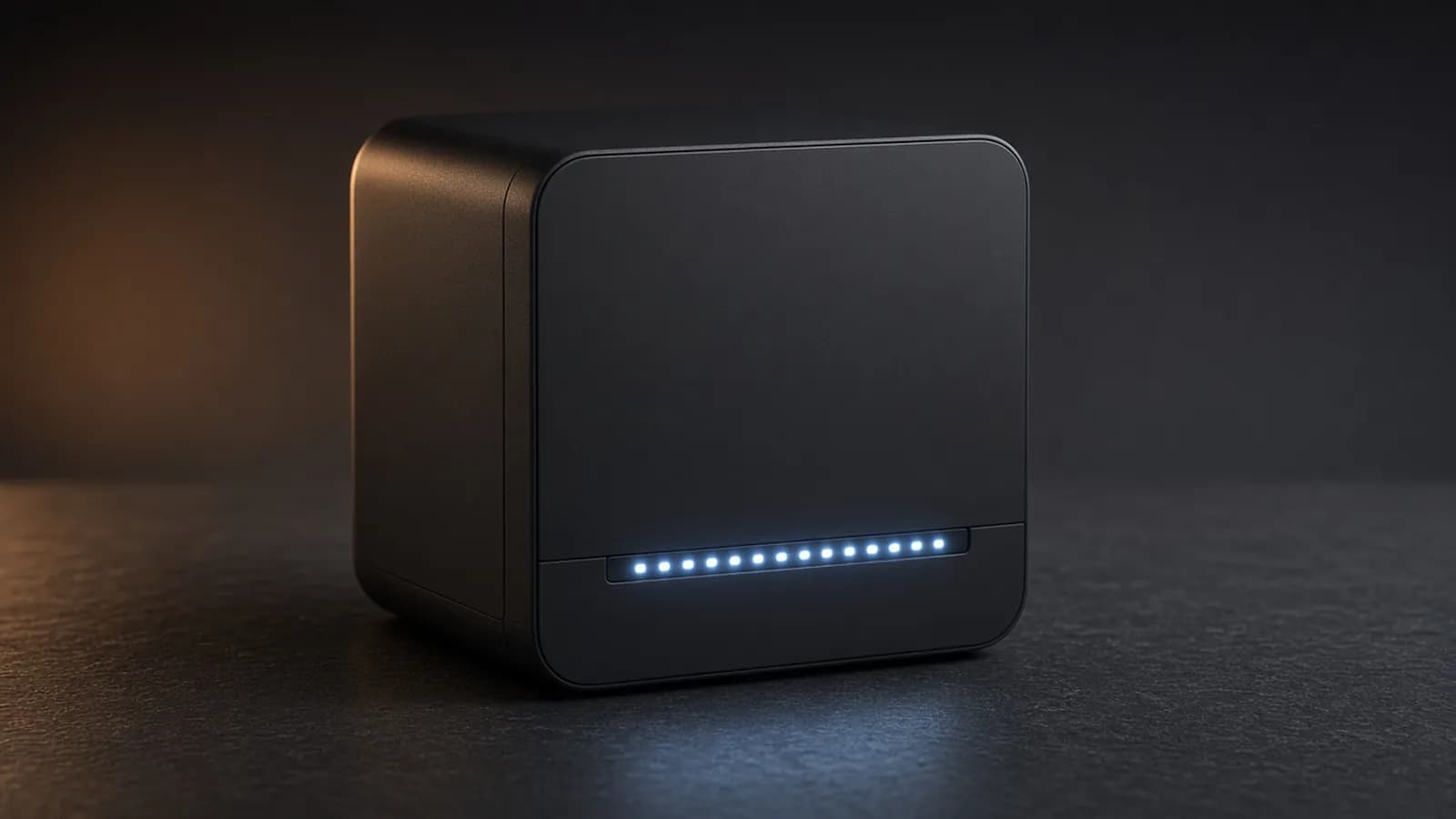
Valve has tried to put a Steam box under the TV before, and it did not go well. The 2026 Steam Machine is a far more convincing attempt: a single, Valve-designed near-cube that runs SteamOS, boots straight into a controller-friendly interface, and plays most of your library without a keyboard in sight.
It arrived on June 29, 2026, at $1,049 for the 512GB model and $1,349 for the 2TB model. That pricing, which reviewers widely tie to a brutal memory and storage market, shapes almost every conversation about this box.
We have gone through the major independent reviews, benchmarks, and teardowns from outlets including Tom's Hardware, PCMag, Digital Foundry, IGN, WIRED, and GamersNexus. The picture is consistent: this is a well-engineered living room PC with mainstream performance and a premium price.
Design and build
The Steam Machine is small enough that the word "desktop" feels wrong. Tom's Hardware lists it at 5.98 by 6.14 by 6.39 inches, and PCMag calls it a near-cube that tucks into a TV console or onto a shelf without fuss.
The exterior is plain matte black, with one flourish: an LED strip across the front. Tom's Hardware counts 17 addressable RGB LEDs, and PCMag notes the strip doubles as a download progress bar, filling left to right as a game installs.
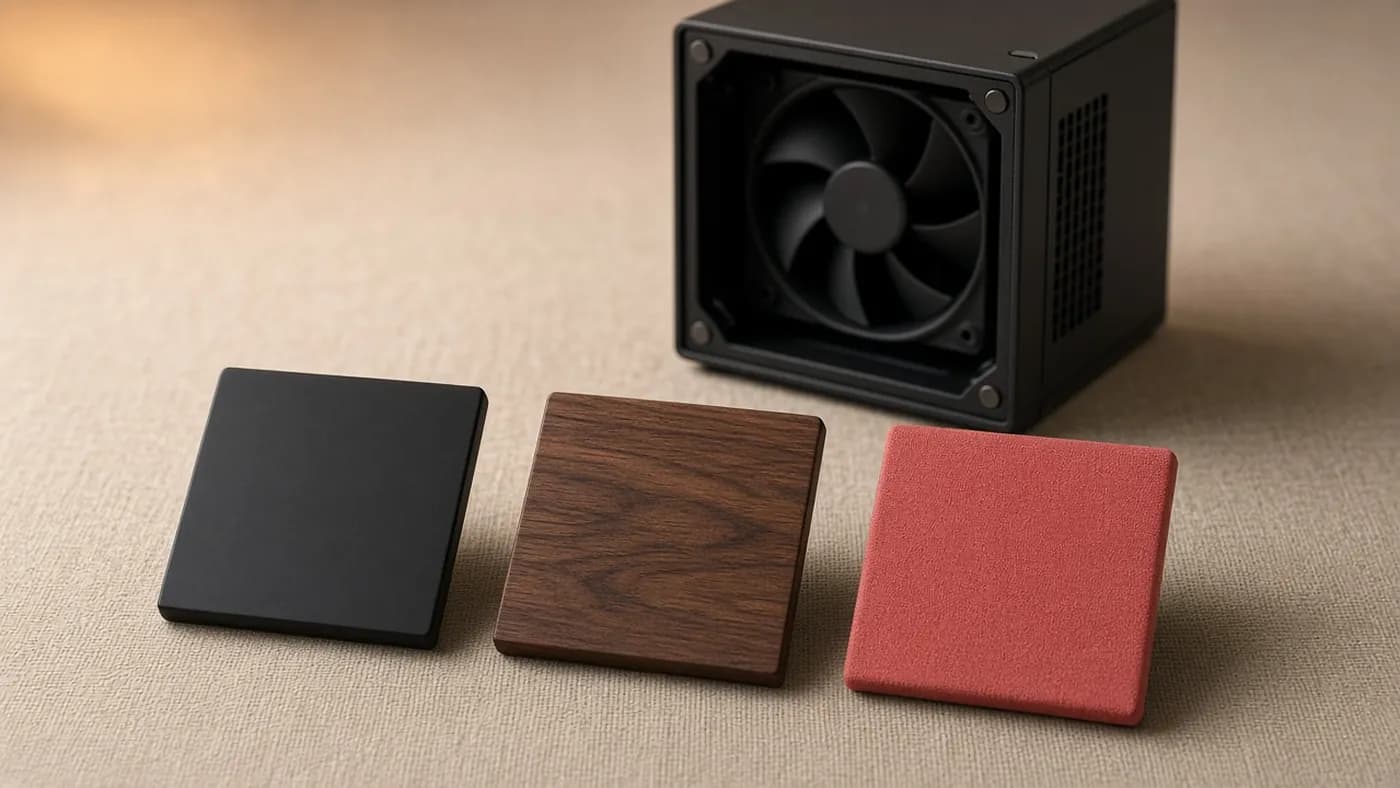
The front panel is a magnetic faceplate. According to Tom's Hardware, the 2TB model ships with two extras, a red fabric plate and a dark wood plate, and Valve has committed to releasing files so owners can 3D print their own.
There is no external power brick. A 300W power supply lives inside, which PCMag points out keeps the cable situation as tidy as a console's.
Ports
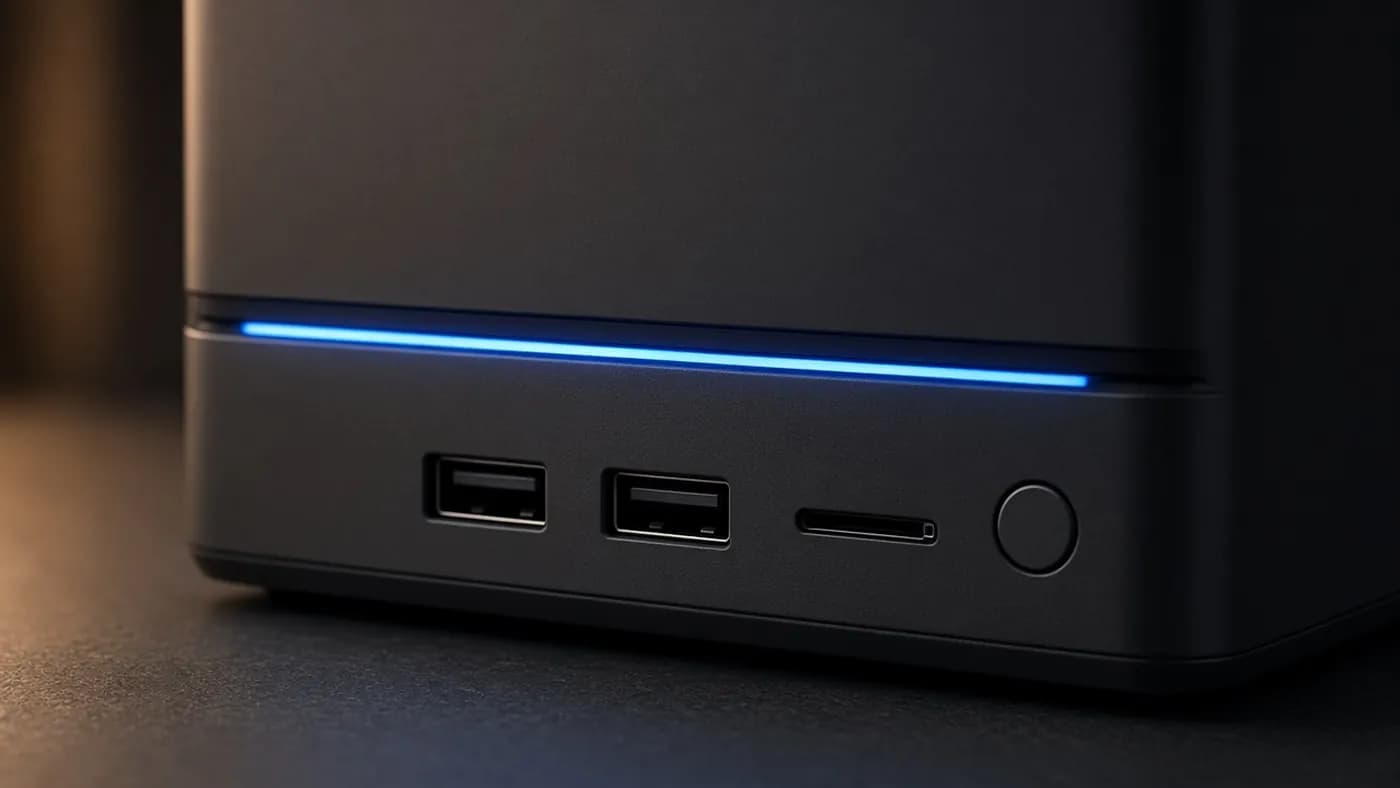
Valve fit a lot of I/O into a small footprint. The front has two USB-A 3.2 Gen 1 ports and a microSD slot, while the rear adds two USB-A 2.0 ports, a 10Gbps USB-C port, DisplayPort 1.4, HDMI 2.0, and Gigabit Ethernet.
Tom's Hardware reports that the HDMI port still supports 4K at 120Hz and HDMI-CEC for turning on the TV, even though it is not labeled HDMI 2.1. Wi-Fi 6E, a separate Bluetooth antenna, and a built-in receiver for the Steam Controller round things out.
Hardware and cooling
Inside is a semi-custom AMD platform. The CPU is a six-core, 12-thread Zen 4 design rated up to 4.8GHz at 30W, and the discrete GPU is an RDNA 3 part with 28 compute units, up to 2.45GHz, 110W, and 8GB of GDDR6.
Digital Foundry's analysis adds useful detail. It describes the GPU as a pared-back take on the RX 7600's Navi 33 silicon, and says the 16GB of DDR5 is a single SO-DIMM rather than a dual-channel pair, because 8GB modules were hard to source.
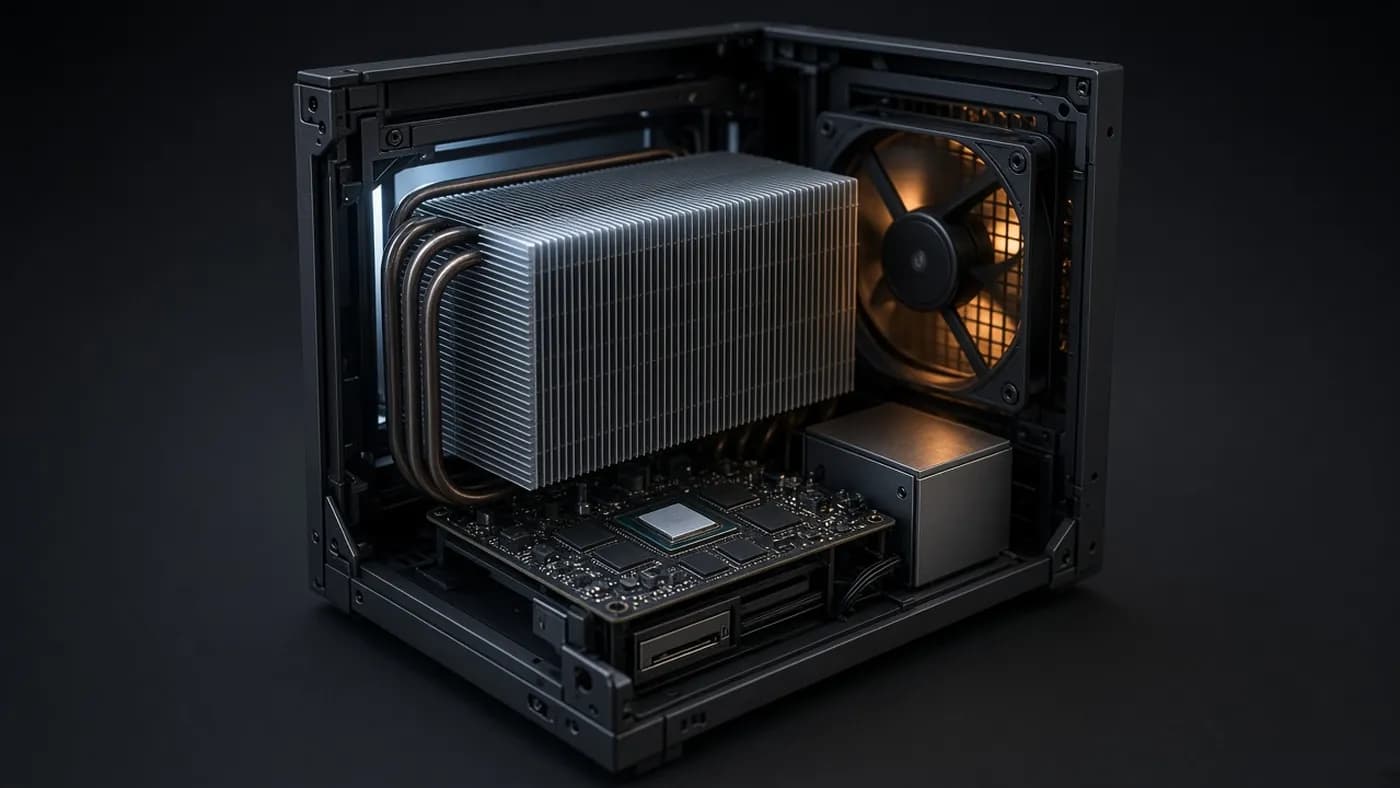
Most of the chassis is heatsink. IGN describes a single rear fan pulling air from the front straight through a block of aluminum fins, and Tom's Hardware lists a 120mm fan on the cooler.
That design pays off in noise. LTT Labs measured 32.2dB at idle and 41.4dB in God of War, close to the 39.7dB and 40.4dB it recorded for a PS5 and PS5 Pro in the same game. PCMag says it could only hear the machine with its ear close to the case.
GamersNexus logged 13W at idle, 173W to 176W in a looping Black Myth: Wukong run, and a brief 209W peak under a combined CPU and GPU torture test before settling at 192W. That is well inside the 300W supply.
The Steam Machine behaves like a console where it matters most in a living room: it is small, quiet, and draws modest power under load.
Performance
This is where expectations need managing. Tom's Hardware built a comparison rig on Linux and found the Steam Machine's graphics landed between the Radeon RX 6600 and RX 7600. In its Cyberpunk 2077 raster test, the Steam Machine hit 79.98fps against the RX 7600's 85.48fps.
Digital Foundry puts the gap to the RX 7600 at roughly 10 to 17 percent depending on the game. PCMag's summary is blunt and fair: far better than the Steam Deck, roughly on par with a console, and behind current GeForce RTX 50-series desktop cards.
1080p and 1440p
At 1080p, the machine is comfortable. PCMag describes "commanding" 1080p results in Cyberpunk 2077, Red Dead Redemption 2, and Guardians of the Galaxy, with the exception of Cyberpunk's path-traced Overdrive preset.
Digital Foundry argues the real sweet spot is native 1440p at 60fps with tuned settings. Its reasoning is that staying GPU-limited keeps frame times flat, while dropping resolution too far can expose CPU limits and add stutter.
4K and upscaling
Valve originally said most Steam titles "play great at 4K 60FPS with FSR." Days before launch, it replaced that line with "Up to 4K gaming with FSR 4.1," after early reviews showed the claim did not hold across demanding games.
The numbers explain why. Tom's Hardware measured Red Dead Redemption 2 at 20fps at 4K on medium settings, rising to 60fps with FSR Performance mode. Forza Horizon 6 on Ultra ran at 30fps at 4K and gained about 10fps with FSR.
IGN saw Cyberpunk 2077 at 14fps at 4K with Ray Tracing Ultra and FSR Performance, jumping to 42fps with ray tracing turned down. PCMag found FSR lifted Cyberpunk's 1080p Ray Tracing Low result from 57fps to 72fps.
Treat the Steam Machine as a 1080p-to-1440p box that can upscale to a 4K TV, not as a native 4K machine. Set expectations there and it performs well.
On the CPU side, Tom's Hardware's HandBrake encode took 6 minutes 33 seconds, 23 seconds slower than an AMD Ryzen AI 7 445 laptop chip. That is fine for games, but not a workstation.
SteamOS and everyday use
SteamOS is the Steam Machine's biggest advantage. It is built for a controller and a couch, and IGN notes that the Quick Access menu makes it easier to tweak refresh rate and GPU power than on an Xbox or PS5.
Valve has carried the Verified program over from the Steam Deck. PCMag and Tom's Hardware both note the bar is 30fps at 1080p, which is low, so a Verified badge means "runs acceptably," not "runs great."

The rough edges are real. PCMag ran into the Rockstar Launcher demanding keyboard input outside the Steam interface, a cloud save that failed to sync, and two unexplained jumps back to the dashboard mid-game.
The bigger issue is anti-cheat. Two of PCMag's three standard benchmark games, F1 2024 and Call of Duty: Modern Warfare 3, would not run because their anti-cheat does not support Linux. If your main games are competitive online shooters, check compatibility before you buy.
What to set up first
If you do buy one, a few steps make the first week smoother:
- Buy the 2TB model or budget for a larger SSD, since PCMag found the 512GB drive filled after a handful of modern installs.
- Add a fast microSD card for older or smaller games, which can run directly from the card.
- Check each multiplayer game's SteamOS compatibility rating before installing it.
- Target native 1440p with tuned settings in demanding games, as Digital Foundry recommends, and use FSR when outputting to 4K.
- Turn off or dim the LED strip if it is distracting in a dark room.
Repairability and upgrades
Valve clearly designed this box to be opened. Tom's Hardware found the rubber feet are actually Torx screws, and the M.2 SSD slot is easy to reach beneath the power supply.
Memory is upgradable, but it is harder to reach. Both PCMag and Tom's Hardware say you have to remove the large heatsink to get to the SO-DIMM slot, and Valve has partnered with iFixit on repair guides. The CPU and GPU are soldered.
How it compares
Price is where the Steam Machine struggles most. Tom's Hardware priced out a comparable DIY build with a Ryzen 5 7600X, Radeon RX 7600, 16GB of DDR5, and a 1TB SSD at $1,048.83, which is essentially the same money in a far larger case.
| Device | Starting price | Best for |
|---|---|---|
| Valve Steam Machine | $1,049 (512GB), $1,349 (2TB) | Steam libraries, SteamOS, tiny footprint |
| PlayStation 5 Pro | $899 (2TB) | Stronger 4K console performance |
| PlayStation 5 Digital Edition | $599 (825GB) | Console exclusives at a lower price |
| Xbox Series X Digital | $599.99 | Console simplicity for less money |

WIRED argues the value is not there compared with a PS5 Pro for AAA play at 4K. IGN takes the other side, calling it an excellent entry-level gaming PC for people who hate driver and settings fiddling. Both views are correct, depending on what you already own.
Who should buy it
The Steam Machine makes the most sense for people with large Steam libraries who want to play on a TV without dragging a tower into the living room. Steam Deck owners who dock to a TV today will get a clear upgrade.
It makes less sense for console players, for anyone chasing high frame rates at 4K, or for PC gamers who already have a recent graphics card. Tom's Hardware notes that nearly any GPU from the last three to four years is already faster.
FAQ
How much does the Steam Machine cost?
The 512GB model is $1,049 and the 2TB model is $1,349. Adding a Steam Controller brings those to $1,128 and $1,428, according to PCMag and Tom's Hardware.
Can the Steam Machine play games at 4K 60fps?
Only lighter games or with heavy compromises. Tom's Hardware got SoulCalibur 6 to its 60fps cap at 4K, but demanding titles needed FSR upscaling and lower settings, and Valve removed its "4K 60FPS" claim before launch.
Is the Steam Machine faster than a PS5?
Not in general. Reporting from Kotaku on the Digital Foundry and Linus Tech Tips results put it in roughly the same range as a base PS5, and it trails the PS5 Pro.
Can you upgrade the storage and memory?
Yes. The M.2 SSD is easy to swap, and the microSD slot adds extra space. The memory is on a replaceable SO-DIMM, but reaching it means removing the heatsink.
Will my multiplayer games work?
Many will, but some will not. Games whose anti-cheat does not support Linux, such as Call of Duty: Modern Warfare 3 in PCMag's testing, will not run on SteamOS.
Final Verdict
The Steam Machine is the best-designed living room PC we have seen from a major company. It is small, quiet, repairable, and SteamOS makes it feel close to a console in daily use.
What holds it back is value. At $1,049 you are paying for convenience and engineering, not frame rates, and console buyers will get more performance for less money. If your games live on Steam and your PC lives in another room, it is still an easy box to like.



Join the conversation